
Cash-Out Refinance in 2026: When Pulling Equity Helps You Buy the Next Deal (and When It Doesn't)
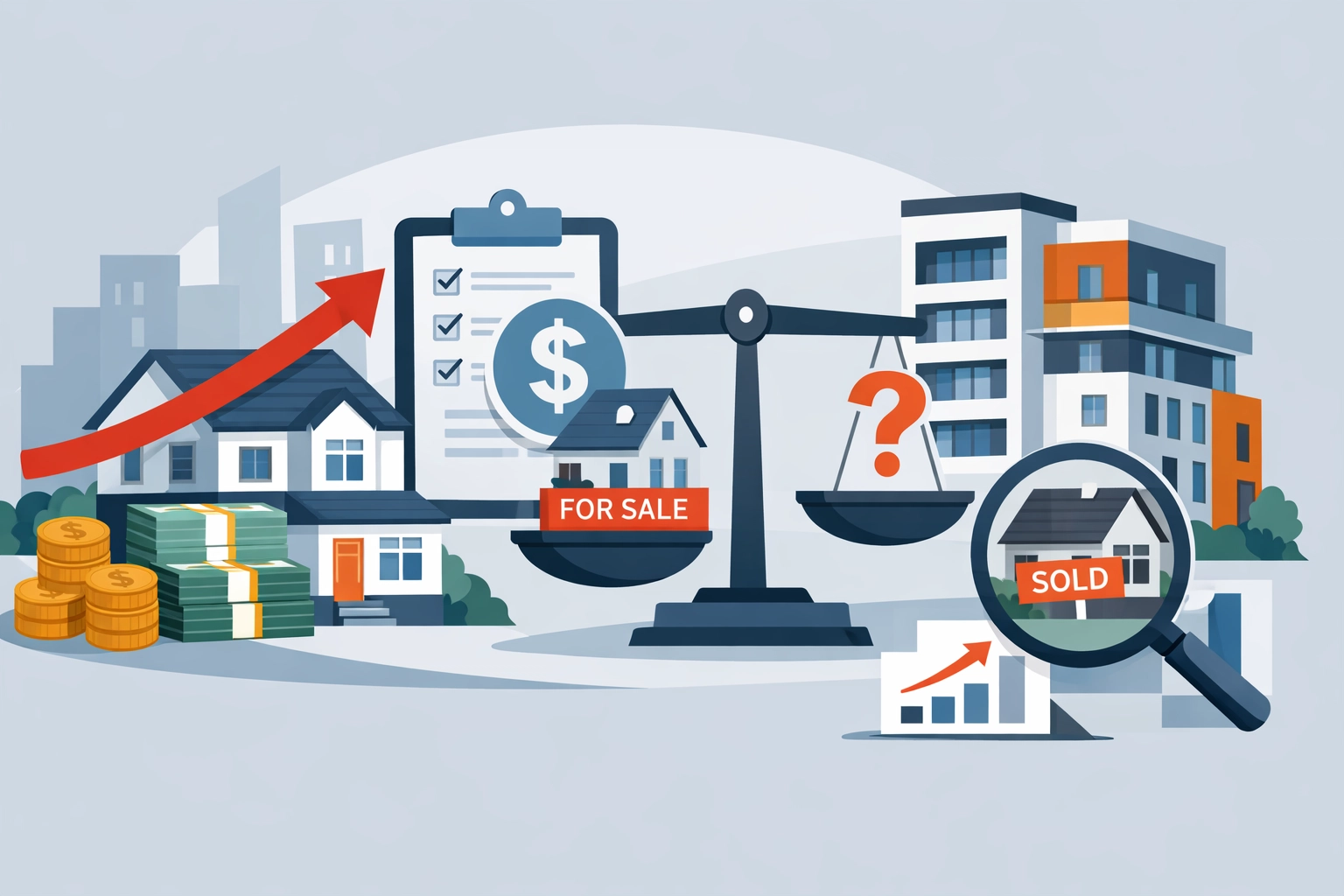
You own a stabilized multifamily property in Tampa worth $8 million with a $4 million loan balance.
Your neighbor just listed a value-add industrial asset for $3.2 million that cash flows day one.
The question isn't whether you have equity. The question is whether pulling it out to fund the next deal makes financial sense in 2026.
Cash-out refinancing has returned as a legitimate wealth-building tool as capital markets regain confidence. But the math is unforgiving.
This post breaks down the economics, the hidden costs, the tax angles, and the exact scenarios where a cash-out refi accelerates your portfolio, and where it becomes a liability.
The Mechanics: How Cash-Out Refinancing Works in Commercial Real Estate
A commercial cash-out refinance replaces your existing loan with a larger one. You pocket the difference.
Standard 2026 parameters:
Source checks: MBA CRE loan maturity volumes and Marcus & Millichap interest rate and debt capital outlook.
- Maximum LTV: 75% for stabilized multifamily and industrial; 65–70% for retail and office
- Minimum DSCR: 1.25x for agency and life companies; 1.20x for some CMBS and private lenders
- Current rates: 6.25–7.50% depending on asset class, sponsorship, and leverage
- Term options: 5-, 7-, or 10-year fixed; 25–30-year amortization
Example calculation:
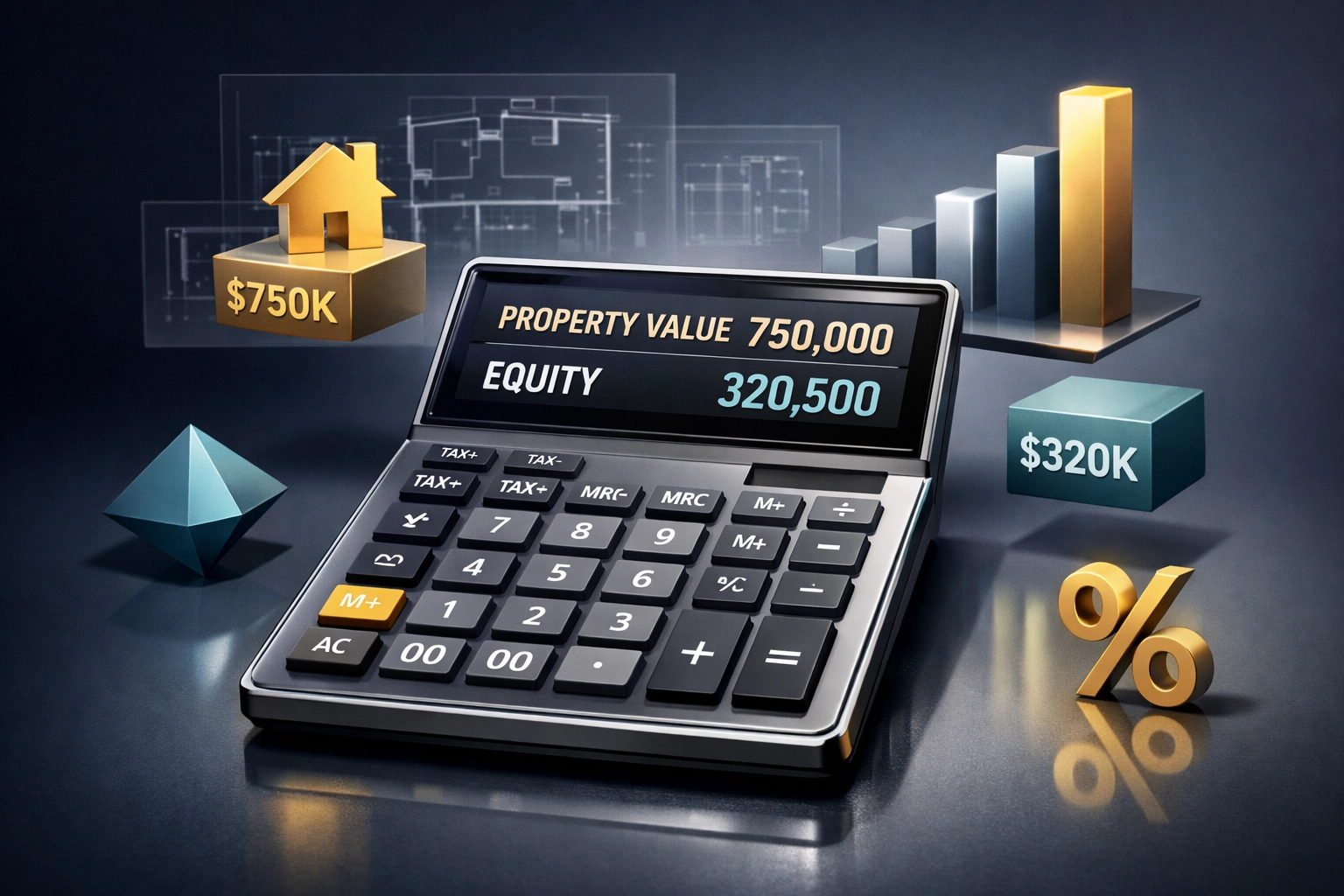
Property value: $8,000,000
Existing loan balance: $4,000,000
New loan at 75% LTV: $6,000,000
Cash out: $2,000,000 (minus closing costs and prepayment penalties)
That $2 million can fund your down payment on the next acquisition, cover a value-add renovation, or provide liquidity for operations.
But it only works if the underlying property supports the increased debt load.
The lender will underwrite to a minimum DSCR, typically 1.25x. If your Net Operating Income (NOI) is $550,000 annually, your maximum annual debt service is $440,000. At 7% interest on a 25-year amortization, that supports roughly a $5.2 million loan.
Run the numbers before you call the lender.
The Real Costs: Yield Maintenance, Defeasance, and Closing Expenses
Most commercial loans written between 2019 and 2022 included prepayment penalties.
Two common structures:
Yield Maintenance: Compensates the lender for lost interest if you pay off early. Formula ties to Treasury yields. If rates have risen since origination, the penalty can be substantial, sometimes 3–6% of the loan balance.
Defeasance: Requires you to purchase a portfolio of U.S. Treasury securities that replicate your loan's cash flows. Expensive and complex. Typically costs 1–4% of the outstanding balance depending on the remaining term and interest rate environment.
2026 reality check:
If your existing loan was originated at 4.5% in 2021 and current refinance rates are 7%, your yield maintenance penalty could exceed $200,000 on a $4 million payoff.
Add another $80,000–$120,000 in closing costs (appraisal, environmental reports, legal fees, title insurance, lender fees).
Net proceeds on a $2 million cash-out after penalties and costs: $1.6–$1.7 million.
You're not pulling $2 million. You're pulling $1.65 million, and now servicing $6 million in debt instead of $4 million.
Make sure the next deal justifies that spread.
Tax Considerations: Not Advice, But Framework
Consult your CPA. This is general guidance.
Cash-out refinance proceeds are not taxable income. You're borrowing against equity, not selling or realizing gain. This is a key advantage over selling and triggering capital gains tax.
However:
- The increased debt service reduces your property's taxable income (interest is deductible)
- If you later sell, your cost basis remains unchanged, depreciation recapture and capital gains are calculated on the original basis, not the leveraged amount
- Using refi proceeds to acquire another property does not qualify for 1031 exchange treatment (you're not selling)
Strategic insight:
A cash-out refi allows you to access capital without selling and without the 45/180-day identification and closing deadlines of a 1031 exchange. You retain ownership of your cash-flowing asset while deploying capital into new opportunities.
But the trade-off is increased leverage and debt service on the original property.
When Cash-Out Refinancing Accelerates Your Portfolio
Scenario 1: Stable Cash Flow + Accretive Acquisition
You own a 120-unit multifamily property in Fort Lauderdale. NOI is $720,000. Existing loan is $5 million at 4.75%, maturing in 2027.
You identify a 50-unit value-add property in Jacksonville priced at $4.2 million that will stabilize at a 7.5% cap rate after $600,000 in renovations.
New loan on Fort Lauderdale property: $7.5 million at 75% LTV (6.85% rate, 30-year amortization).
Cash out after prepayment and closing costs: $2.2 million.
New annual debt service: $596,000.
New DSCR: 1.21x (acceptable for agency debt).
You deploy $1.5 million as down payment and renovation capital on the Jacksonville acquisition. The stabilized NOI is $315,000 annually, an 11% return on your $2.85 million total basis.
Result: You've added $315,000 in annual NOI to your portfolio without selling your Fort Lauderdale asset.
Scenario 2: Bridge Loan Expiring + Permanent Takeout
You secured a 24-month bridge loan on a retail repositioning project in 2024. The property has stabilized. NOI is now $410,000. The bridge loan balance is $3.2 million at 9.5% floating.
You refinance into permanent debt at $4.8 million (70% LTV on a $6.85 million appraised value) at 7.25% fixed for 10 years.
Cash out: $1.4 million after payoff and costs.
You use $900,000 to acquire an adjacent pad site for ground-lease income and retain $500,000 as portfolio reserves.
Result: You've locked in long-term, lower-cost debt and extracted equity for the next opportunity.

When It Creates Risk and Erosion
Scenario 3: Overleveraged on Softening Asset
You own a 45,000 SF suburban office property in Orlando. Occupancy is 72%. NOI is $285,000. Existing loan is $2.5 million at 5.25%, maturing in 2028.
Current market value: $4 million (down from $5.2 million in 2022 due to office sector softness).
You attempt a cash-out refi to $3 million (75% LTV). New rate: 7.5%. Annual debt service: $253,000.
DSCR: 1.13x. Most lenders reject this. Even if approved, a single tenant departure drops you below breakeven debt service coverage.
Result: The property can't support the increased leverage. The cash-out refi fails underwriting, or worse, proceeds and puts you in immediate distress if occupancy slips further.
Scenario 4: Yield Maintenance Penalty Negates Value
You own an industrial asset in Miami financed in 2020 at 3.75%. Outstanding balance: $6 million. Maturity: 2030.
You want to pull $2 million in equity to acquire a competing property.
Yield maintenance penalty: $420,000 (rates have risen 350 bps).
Closing costs: $110,000.
Net cash out: $1.47 million on a $2 million gross increase in debt.
New debt service increases by $168,000 annually. The industrial property's NOI only increased $95,000 since origination.
Result: You're paying $168,000 more annually to net $1.47 million. That's an implied cost of capital exceeding 11%, higher than most acquisition returns in 2026.
Don't execute this trade.
Decision Framework: Four Questions Before You Proceed
1. Does the property's DSCR support the new debt?
Run a conservative NOI projection (assume 5% vacancy increase). Calculate debt service on the new loan. Divide NOI by debt service. If the result is below 1.25x, stop.
2. What are the total prepayment and closing costs?
Request a payoff quote from your current lender. Add 1.5–2% for closing costs. Subtract this total from the gross cash-out amount. Is the net number sufficient for your intended use?
3. What is the all-in cost of capital?
Calculate the increase in annual debt service. Divide by the net cash-out proceeds. If this implied rate exceeds your expected return on the new investment, the math doesn't work.
4. Do you have 6–12 months of reserves for both properties?
Cash-out refis increase leverage. If tenant rollover, capex, or market disruption occur on either property, can you service both debts simultaneously without distress?
If the answer to any of these is no, reconsider the strategy.

Alternatives Worth Exploring
Mezzanine debt or preferred equity: Allows you to access capital without refinancing the entire first mortgage. Higher cost (10–14%), but no prepayment penalties and faster execution.
Bridge-to-agency execution: Secure short-term bridge financing on the new acquisition, then refinance both properties simultaneously into lower-cost agency debt once stabilized.
Joint venture equity: Bring in a capital partner on the new deal instead of leveraging the existing asset. You retain majority control and avoid over-levering your portfolio.
HELOC on free-and-clear assets: If you own any unencumbered properties, a commercial line of credit provides flexible, lower-cost access to equity without full refinancing.
The Bottom Line
Cash-out refinancing works in 2026 when the underlying asset supports increased leverage, prepayment costs are manageable, and the deployment opportunity generates returns that justify the higher debt service.
It fails when you're stretching DSCR, chasing marginal deals, or paying prohibitive penalties to access capital that could be sourced more efficiently elsewhere.
Run the numbers. Stress-test the scenarios. Know your penalties before you call the lender.
The commercial real estate investors who grow portfolios in 2026 will be the ones who deploy leverage intelligently: not aggressively.
If you are evaluating a cash-out refinance to fund your next acquisition, contact our team for a no-obligation debt analysis. We will model the current loan, calculate net proceeds, and structure the optimal capital solution for both properties.
Leverage should accelerate wealth. Not create risk you can't manage.




Continue Reading



Have a Deal in Progress?
Let’s structure the right capital solution.
