
From Resilience to Optimism: Why CRE Investors are Pivoting in Early 2026

The defensive playbook is over.
For the past 24 months, commercial real estate investors operated in survival mode: bracing for higher rates, frozen transaction activity, and a debt market that felt more like a minefield than an opportunity. But February 2026 tells a different story. According to Cushman & Wakefield's latest Resilience to Optimism report and CBRE's 2026 Investor Intentions Survey, the industry has officially shifted gears from "wait and see" to "go and grow."
Capital is moving again. Transaction volume is climbing. And investors who spent 2025 protecting their portfolios are now actively hunting for acquisitions and refinance opportunities.
Here's why the pivot is real: and why sitting on the sidelines in 2026 is the riskiest move you can make.
The 2025 Playbook: Survive the Storm
Let's be clear about where we were.
Rising interest rates crushed valuations. Lenders pulled back. Borrowers delayed refinances. Transactions that should have closed in 2023 dragged into 2024, and many never closed at all.
The commercial real estate capital markets went into deep freeze.
Investors adopted a defensive posture: holding assets longer, avoiding new acquisitions, and hoping that Fed policy would eventually stabilize. The mantra was simple: don't overpay, don't overleverage, and don't get caught with maturing commercial loans you can't refinance.
That was the right strategy for 2025.
But it's the wrong strategy for 2026.

What Changed: Falling Rates and Fresh Capital
The single biggest catalyst driving optimism is easing monetary policy and improved debt availability.
Interest rates have stabilized and started to decline. That shift unlocked billions in sidelined capital. According to CBRE's survey data, institutional investors are reassessing deal pipelines they shelved in 2024, and developers are dusting off projects that were underwritten 18 months ago.
J.P. Morgan's latest market commentary captures it perfectly: "The 2026 market is strong from both a capital and fundamental standpoint."
Translation: The debt is there. The equity is there. And the fundamentals across most asset classes are healthier than expected.
Here's what that means in practical terms:
- Life company balance sheets are deploying capital again after a year of retrenchment.
- Agency lenders (Fannie Mae, Freddie Mac) received a 20.5% increase to their lending caps for multifamily: opening up billions in liquidity.
- CMBS issuance is trending upward as investor appetite for commercial mortgage-backed securities returns.
- Private credit funds are aggressively competing for bridge loan deals, especially in markets where traditional lenders remain cautious.
The capital stack is functional again. And that changes everything.
Sector-Specific Strength: Not All Assets Are Equal
One of the clearest signals that 2026 isn't a broad recovery: it's a selective, differentiated opportunity set: is how capital is flowing to specific property types.
Multifamily: The Goldilocks Asset
Multifamily remains the institutional darling. GSE lending caps are up. Rent growth is stabilizing. And the supply glut that plagued Sun Belt markets in 2024 is working its way through absorption.
According to Cushman & Wakefield's data, multifamily investors are particularly bullish on Midwest and Northeast markets where new supply is constrained and demand remains strong. Chicago, Boston, and Philadelphia are seeing renewed acquisition activity as cap rates compress.
Industrial: Still the Workhorse
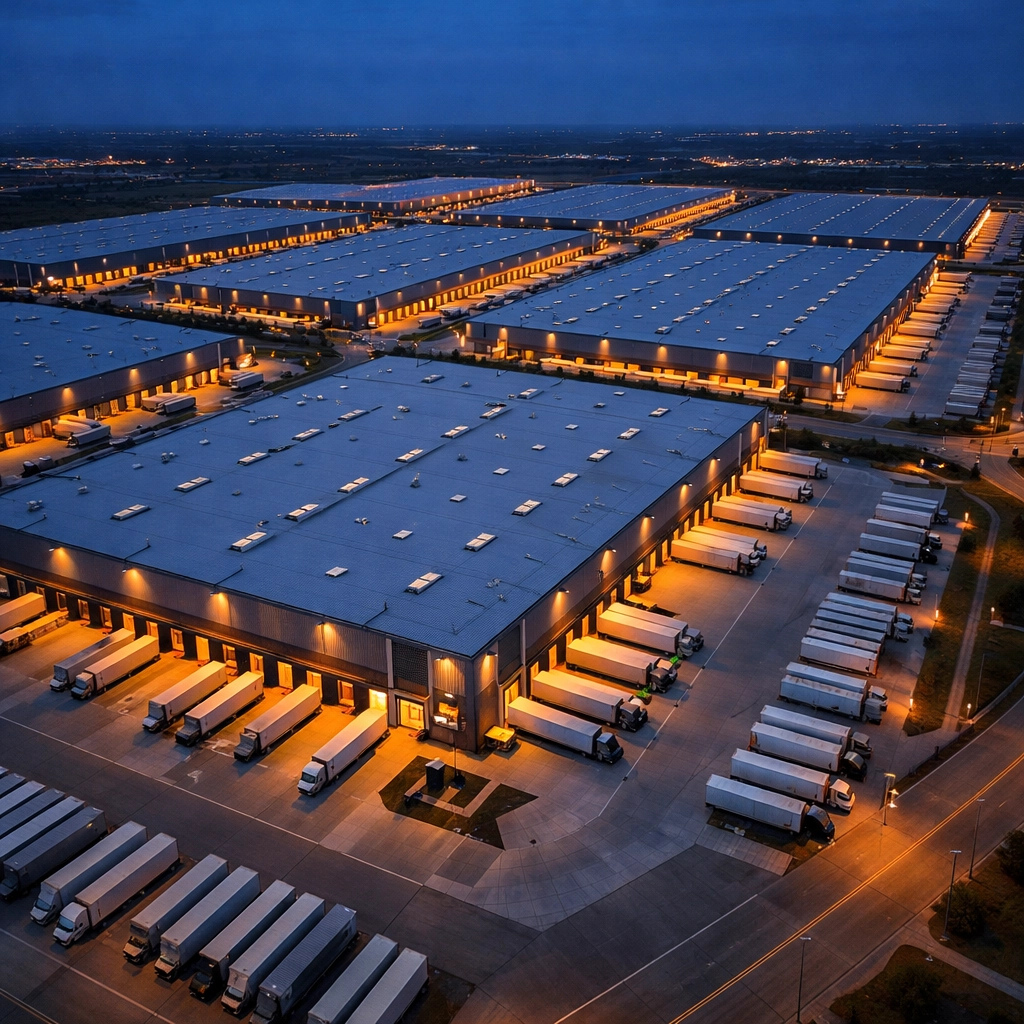
Industrial real estate continues to outperform. Major logistics hubs: California's Inland Empire, Dallas-Fort Worth, Atlanta: are seeing sustained demand driven by nearshoring, e-commerce fulfillment, and manufacturing reshoring.
The "Amazon effect" didn't fade. It evolved.
Office: The Great Divide
Office is the most polarized asset class in 2026.
Class A properties in core urban markets: Midtown Manhattan, San Francisco's Financial District, downtown Los Angeles: are achieving record rents and attracting institutional capital. Trophy assets with top-tier amenities and ESG credentials are winning.
Class B and C office? Still struggling. Cities like Denver, Chicago, and Washington, D.C., are dealing with elevated vacancy rates. Lower-quality space risks obsolescence.
The office playbook in 2026 is binary: best-in-class or bust.
Data Centers and Retail: The Outliers
Data centers are the breakout star of 2026. Explosive demand from AI infrastructure, cloud computing, and edge computing is driving investor appetite. CBRE's survey shows data centers ranking among the top three most-desired asset classes for institutional buyers.
Retail, meanwhile, is quietly solid. Consumer spending remains strong. New supply is limited. And grocery-anchored centers with strong demographics are performing well.
The Maturity Wall: Why "Wait and See" Is Over
Here's the reality that's forcing the pivot: $936 billion in commercial loans are maturing between 2026 and 2028.
That's not a projection. That's the refinance pipeline.
Borrowers who extended loans in 2023 and 2024 are running out of runway. Properties that were underwritten at 3.5% interest rates are now facing 6%+ refi costs. And lenders who were willing to grant forbearance 18 months ago are now expecting full payoffs or fresh capital infusions.
The "wait and see" approach assumes market conditions will improve enough to justify holding out.
But February 2026 data from CoStar and CBRE suggests the opposite: conditions have already improved as much as they're going to in the near term.
Rates have stabilized. Lenders are back in the market. Transaction volume is climbing.
Waiting longer doesn't reduce risk. It increases it.
Investors who act now: refinancing maturing commercial loans, locking in bridge financing, or acquiring distressed assets at discounts: are positioning themselves ahead of the crowd. Those who wait risk getting squeezed when the maturity wave peaks in late 2026 and early 2027.
Capital Stack Opportunities: Where the Smart Money Is Moving
The shift from resilience to optimism isn't just about sentiment. It's about where capital is deploying.
Here's where institutional investors and private equity funds are focusing in early 2026:
Bridge Loans for Value-Add Plays
Investors are using short-term bridge debt to acquire properties that need repositioning: older multifamily assets, underperforming retail centers, industrial buildings in secondary markets. The thesis: lock in the asset at a discount, execute the business plan, and refinance into permanent debt once stabilized.
Recapitalization of Maturing Debt
Borrowers with strong fundamentals but underwater loans are bringing in equity partners to recapitalize. This preserves ownership while satisfying lender requirements. It's a win-win in markets where selling would lock in losses.
Preferred Equity and Mezzanine Financing
The middle of the capital stack: preferred equity and mezzanine debt: is seeing renewed activity. Investors want yield without taking full ownership risk. Borrowers want flexibility without giving up control.
Agency Debt for Multifamily Stabilization
Fannie Mae and Freddie Mac are the dominant players in multifamily refinancing. Borrowers with stabilized assets, strong occupancy, and clean financials are locking in 10-year fixed-rate agency loans at attractive spreads.
The common thread? Opportunistic capital is replacing defensive capital.

Political and Regulatory Risks: The Asterisks
No discussion of 2026 optimism is complete without acknowledging the headwinds.
Political uncertainty remains elevated. Potential federal shutdowns, regulatory changes, and inflation concerns are top-of-mind for institutional investors, according to CBRE's survey data.
Zoning restrictions, rent control policies, and ESG mandates are creating friction in certain markets. Investors are underwriting those risks more carefully than they did in 2021.
But here's the difference: 2026 investors are building those risks into their models rather than avoiding the market entirely.
That's the shift. Risk isn't a deal-killer anymore. It's a pricing variable.
What This Means for Borrowers and Investors
If you're a property owner with debt maturing in 2026 or 2027, the message is clear: start your refinance process now.
Capital is available. Lenders are competing. And the window of opportunity is open.
If you're an investor looking to deploy capital, focus on sectors and geographies with strong fundamentals and manageable supply dynamics. Multifamily in the Midwest. Industrial in logistics hubs. Trophy office in gateway cities. Data centers anywhere.
And if you're a borrower or investor who spent 2025 in "wait and see" mode, it's time to shift gears. The market has moved on. The capital is flowing. And the investors who are acting decisively in Q1 2026 are the ones who will dominate returns in 2027 and beyond.

The Bottom Line
The pivot from resilience to optimism isn't hype. It's data-driven, capital-backed reality.
Cushman & Wakefield's research shows investor confidence climbing. CBRE's survey data shows transaction volume accelerating. And the debt markets: once frozen: are functional again.
The defensive playbook served its purpose in 2025. But 2026 is a different game.
Capital is moving. Opportunities are surfacing. And the investors who recognize the shift early are the ones who will win.
The question isn't whether the market has turned. It's whether you're ready to move with it.
Need help structuring a refinance or sourcing acquisition capital for your next deal? Reach out to Triton Equity Group and let's talk through your options.




Continue Reading



Have a Deal in Progress?
Let’s structure the right capital solution.
