
Industrial Logistics 2.0: Why Small-Bay Infill Underwriting is Decoupling from Big-Box Vacancy
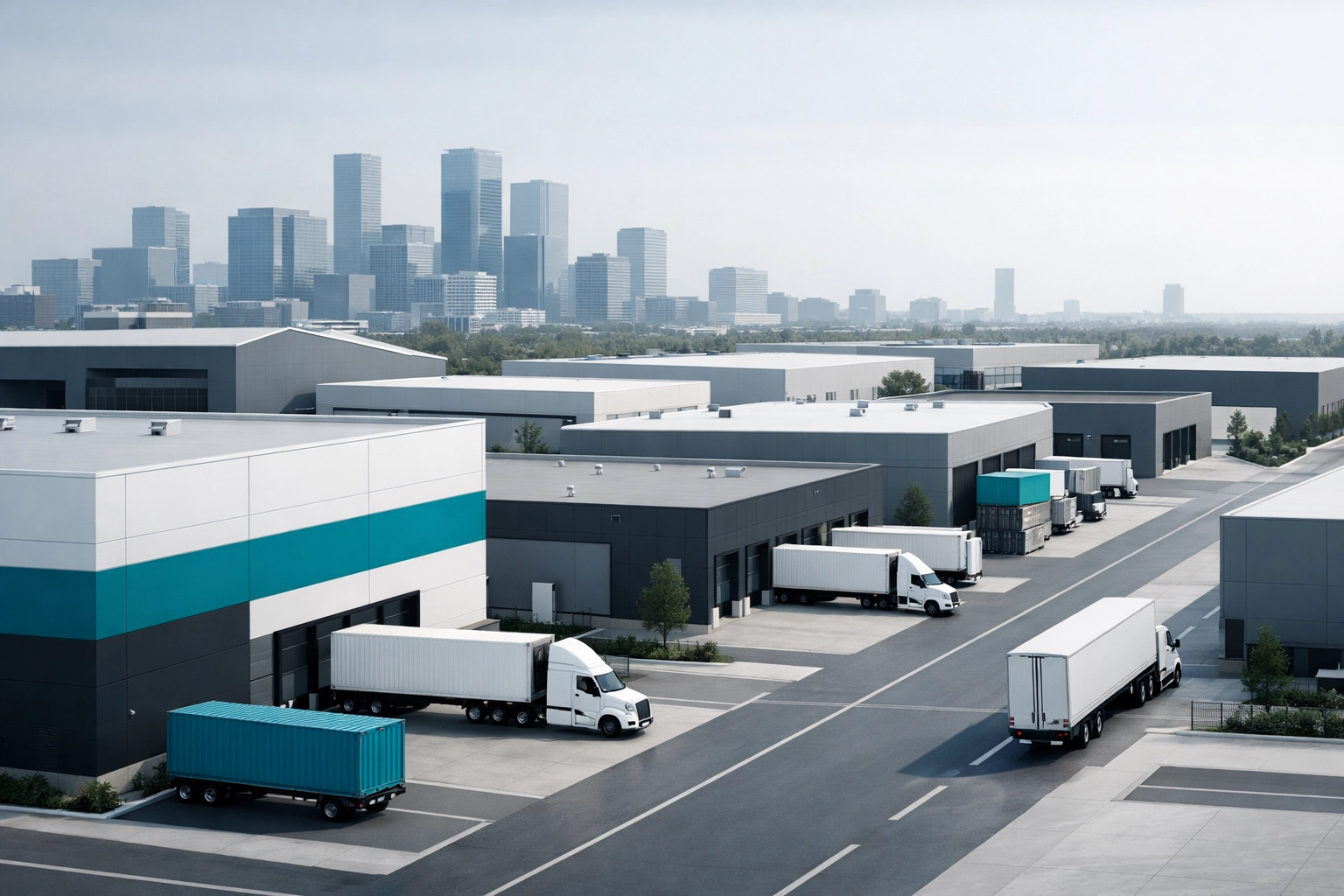
Headlines say industrial vacancy is climbing, but if you're looking for 20,000 square feet in an infill market, you're still in a bidding war.
The big-box surplus is masking a chronic shortage in the local logistics layer.
National industrial vacancy is projected to hit 8.6% in 2026, according to Marcus & Millichap's latest industrial outlook. That sounds like softening demand. It sounds like lender caution is warranted.
But that number conceals two completely different markets operating under the same asset class label.
Big-box warehouses: those exceeding 100,000 square feet: are sitting at 11.5% vacancy. Meanwhile, smaller industrial properties under 25,000 square feet are holding vacancy rates below 4% in many core infill markets.
This isn't a cyclical blip. It's a structural divergence driven by the reshaping of last-mile logistics, e-commerce fulfillment patterns, and the shift from national distribution models to localized inventory networks.
And lenders are starting to price that bifurcation into debt.
The Big-Box Overbuilding Story
The industrial development boom of 2021–2023 was dominated by speculative big-box construction.
Driven by Amazon's aggressive expansion, third-party logistics providers, and institutional capital chasing yield, developers flooded markets with million-square-foot facilities in exurban nodes.
But demand hasn't kept pace.
CBRE's 2026 U.S. Real Estate Market Outlook notes that big-box absorption has slowed sharply as retailers and logistics operators reassess inventory strategies post-pandemic. The just-in-case model that fueled speculative leasing in 2021 has given way to more measured capacity planning.
Vacancies in these mega-warehouses are concentrated in secondary and tertiary markets where tenant demand was always thinner. Inland Empire, Central Pennsylvania, and parts of the I-81 corridor are seeing elevated availability as tenants consolidate or delay expansions.
The result: construction lending for speculative big-box projects has nearly evaporated.
Banks that underwrote pro formas at 95% occupancy are now stress-testing at 80%. Debt service coverage ratio (DSCR) floors have moved from 1.25x to 1.40x in many cases. And permanent lenders are requiring longer lease terms and stronger sponsor guarantees.
Big-box is not dead. But it's no longer the low-risk, high-leverage play it was 36 months ago.
The Small-Bay Infill Premium
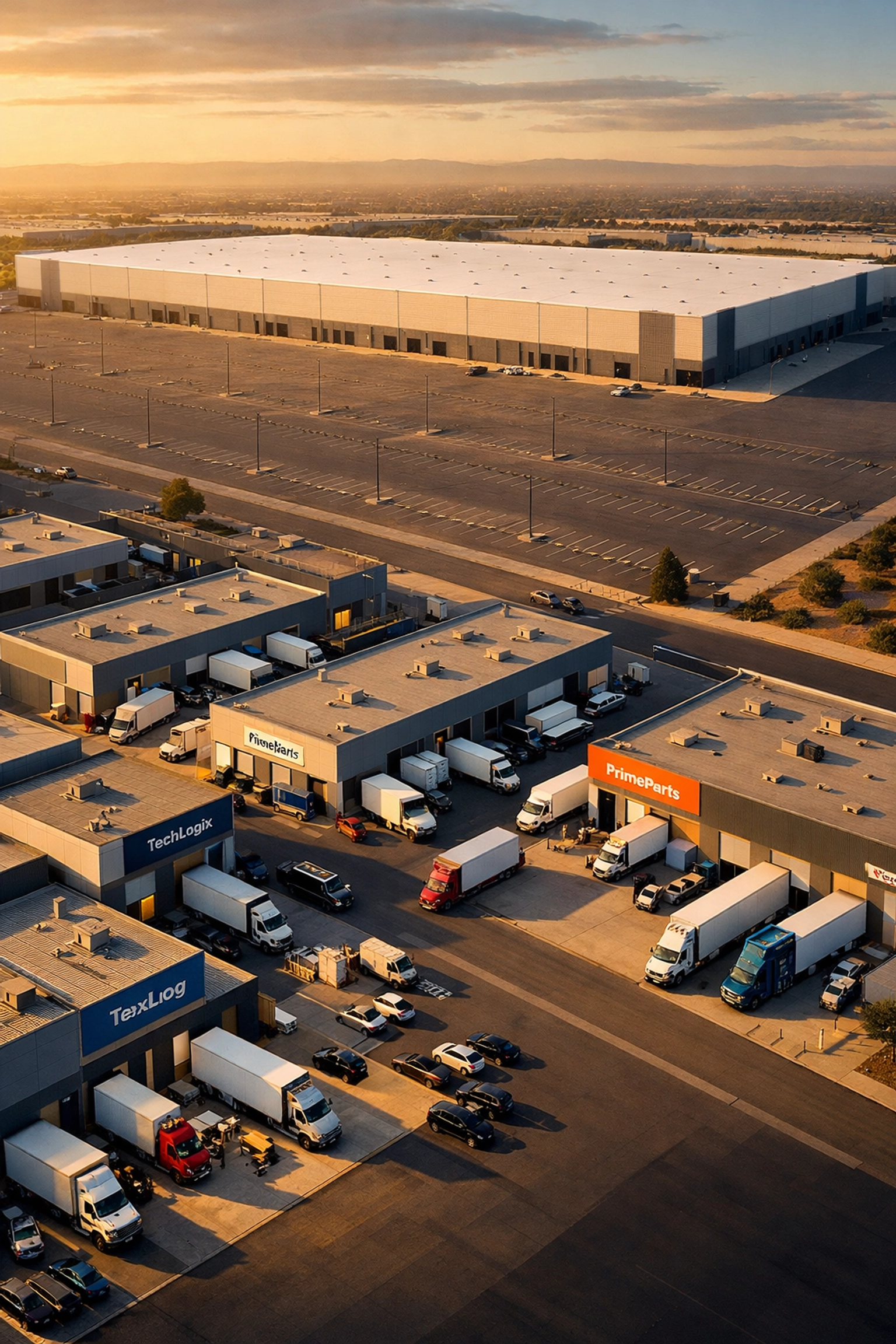
Small-bay industrial: typically 10,000 to 30,000 square feet: tells a different story.
These properties are clustered in infill urban and first-ring suburban locations. They serve local distributors, contractors, light manufacturers, service businesses, and regional e-commerce fulfillment nodes that can't justify (or afford) big-box space.
Demand is relentless.
Vacancy in this segment remains structurally tight because supply is constrained. Developable land in infill markets is scarce and expensive. Zoning hurdles are higher. Construction costs per square foot are elevated due to smaller building footprints and tighter site constraints.
But tenants are willing to pay.
Rent growth in small-bay industrial has outpaced the national industrial average by 150 to 200 basis points in markets like Dallas, Phoenix, South Florida, and Atlanta. Triple-net lease structures are common, shifting operating expense risk to tenants. And vacancy loss risk is mitigated by shorter lease terms with built-in escalations.
From an underwriting perspective, small-bay properties are behaving more like necessity retail than traditional industrial assets.
Lenders are noticing.
Lender Appetite Is Bifurcating
Banks and debt funds are increasingly separating industrial into two distinct underwriting buckets.
Big-box: Conservative leverage, higher spreads, and preference for stabilized, credit-tenant-occupied assets. Ground-up construction financing is rare unless pre-leased or backed by institutional sponsors with deep liquidity.
Small-bay infill: Competitive debt pricing for acquisition and repositioning plays. Lenders are underwriting these properties at cap rates of 6.5% to 7.5%, even with shorter weighted average lease terms, because replacement cost coverage and location scarcity provide downside protection.
One debt fund we recently worked with is actively seeking small-bay industrial acquisitions in Sun Belt markets. They're offering 75% loan-to-value (LTV) at floating rates pegged to SOFR plus 275 basis points: pricing that would have been unthinkable for industrial just two years ago when agency debt dominated.
Why the shift?
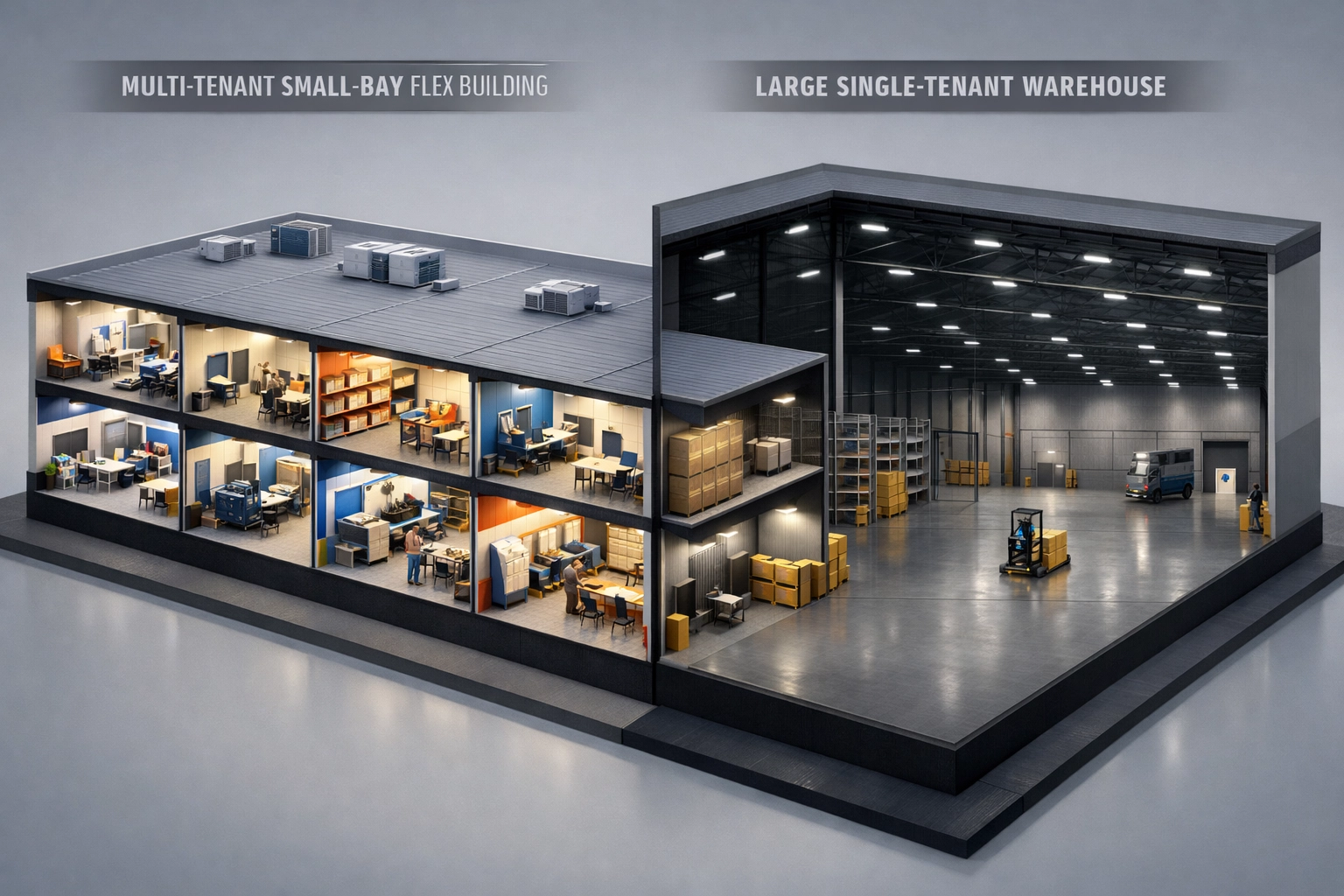
Small-bay industrial is perceived as less cyclical. Tenant diversity across 10 to 20 units per property reduces single-tenant rollover risk. Infill locations provide exit liquidity in downturns because land value acts as a floor.
And critically, these assets are benefiting from the continued decentralization of logistics networks.
National retailers and third-party logistics operators are shifting from hub-and-spoke models to distributed micro-fulfillment strategies. That means more demand for 15,000-square-foot facilities within 10 miles of population centers: and less demand for 500,000-square-foot boxes in corn fields.
Strategic Implications for Borrowers and Investors
If you're holding or acquiring industrial assets in 2026, strategy matters more than ever.
For big-box owners facing refinancing: Expect tighter proceeds and higher equity requirements. If your property is in a tertiary market with rising vacancy, consider repositioning strategies: subleasing to multiple tenants, converting portions to cold storage, or exploring sale-leaseback structures to lock in occupancy.
Lenders will reward longer-term lease commitments and investment-grade tenants with better terms. But if you're sitting on vacant spec space in a soft submarket, your options may be limited to bridge debt or preferred equity to fill the capital gap.
For small-bay infill investors: This is a strong entry point. Cap rates in the 6.5% to 7% range still offer yield premium over multifamily and retail in comparable locations, and the debt markets are open.
Multi-tenant industrial flex space: properties that combine warehouse, office, and showroom uses: are particularly attractive. These assets appeal to a broader tenant pool and can achieve higher rents per square foot than pure warehouse product.
If you're evaluating acquisitions, prioritize markets with population growth, limited industrial land supply, and strong e-commerce penetration. South Florida, Charlotte, Nashville, and Raleigh-Durham are seeing consistent small-bay outperformance.
And if you're a developer, consider adaptive reuse opportunities. Converting obsolete retail or low-rise office into small-bay industrial can unlock value in infill locations where ground-up development is cost-prohibitive.
The Underwriting Playbook Has Changed
Lenders are no longer treating industrial as a monolithic asset class.
Big-box properties are being underwritten with the same caution as office and retail: emphasis on tenant quality, lease duration, and market fundamentals. Small-bay infill is being underwritten more like necessity-based retail or industrial self-storage: emphasis on location scarcity, replacement cost, and tenant diversity.
The difference in debt pricing reflects that risk assessment.
If you're positioning a deal for financing in 2026, understand which bucket your asset falls into. A 150,000-square-foot warehouse in a secondary market will be evaluated completely differently than a 20,000-square-foot flex property in an urban infill location: even if both are technically "industrial."
The national vacancy number is a headline. The underwriting reality is granular.
And the capital is flowing to properties where scarcity, location, and tenant demand are aligned.
Final Thought
Industrial real estate in 2026 isn't experiencing uniform softening.
It's experiencing a market correction in oversupplied segments and continued tightening in undersupplied ones.
Big-box vacancy at 11.5% tells you where speculative capital overshot. Small-bay vacancy below 4% tells you where structural demand exceeds supply.
Lenders are pricing that divergence into their debt. Investors who recognize the split and position accordingly will find opportunity. Those who treat industrial as a single market will struggle to secure competitive financing or achieve target returns.
The underwriting playbook has evolved. Make sure your capital strategy has too.
If you're evaluating refinancing options or acquisition financing in this environment, reach out to discuss strategy tailored to the current lending landscape.




Continue Reading



Have a Deal in Progress?
Let’s structure the right capital solution.
