
Industrial vs. Multifamily in 2026: The Maturity Wall, Refinance Playbooks, and Where Capital Still Wins
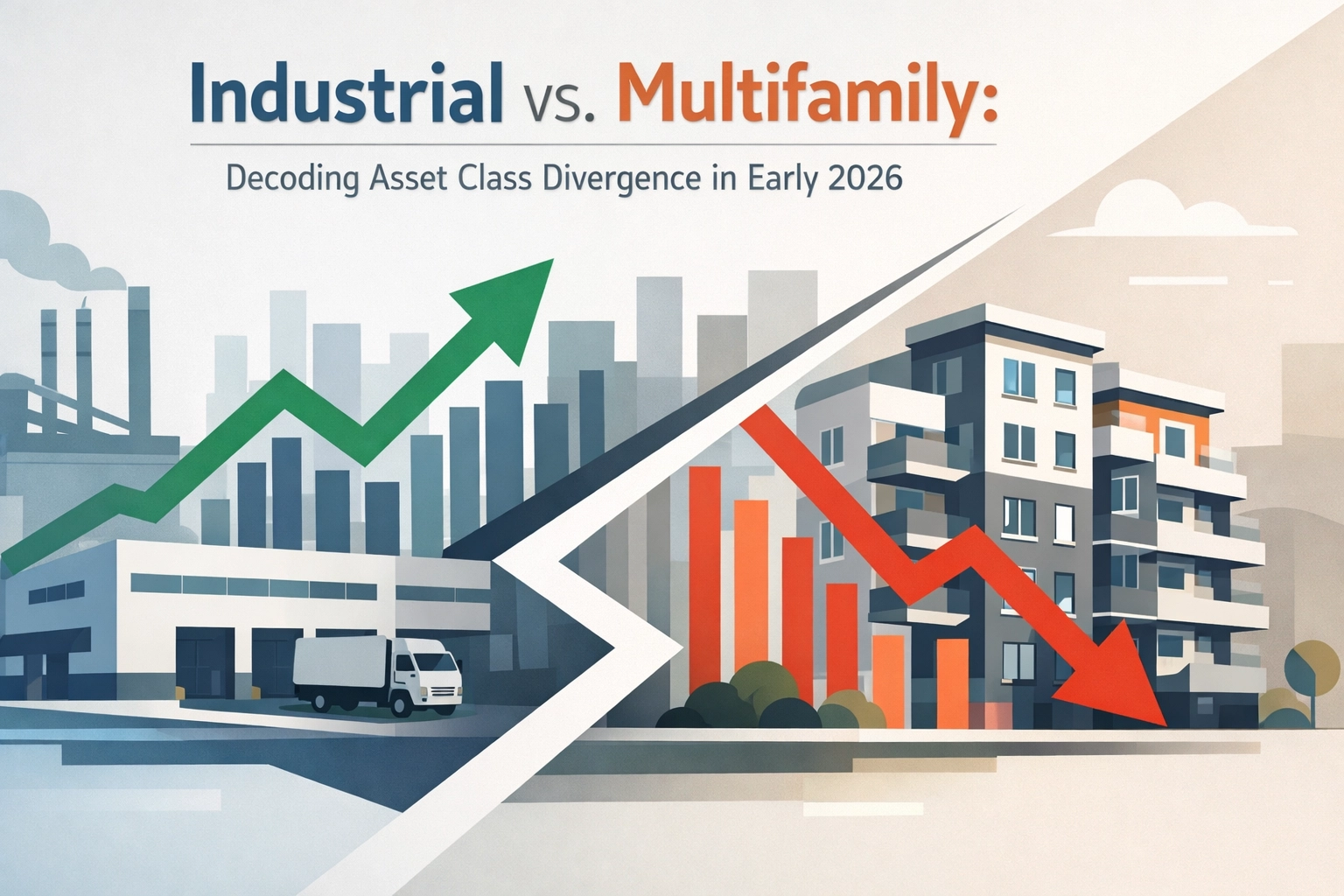
February 2026. One market. Two very different outcomes.
Industrial is getting rewarded with liquidity and tighter spreads.
Multifamily is getting underwritten deal-by-deal as the industry works through supply, concessions, and the multifamily loan maturity cycle.
This is the center of commercial real estate trends 2026. And it is driving commercial real estate lending trends across banks, agencies, debt funds, and bridge lenders.
For borrowers, the question is not “Can I refinance?”
It is “What refinance structure matches my asset, my DSCR, and my timing on industrial loan maturity or agency debt windows?”
Industrial Property Financing in 2026: Refi Windows Are Open (If You Hit the Metrics)
Industrial real estate remains the capital magnet in early 2026.
But this is not “easy money.” It is disciplined industrial property financing for assets that underwrite clean.
Drivers remain straightforward:
- E-commerce and 3PL throughput
- Manufacturing reshoring
- AI infrastructure expansion (data centers + supporting logistics)
For owners facing an upcoming industrial loan maturity, speed matters. The best execution is typically sized around in-place cash flow, not pro forma.
Data centers stand out with exceptional performance metrics. Vacancy rates hit 1.6% nationally: the tightest supply conditions on record. AI computing infrastructure requirements continue to drive absorption, with hyperscale facilities in Northern Virginia and Phoenix seeing 100% pre-leased construction pipelines.
Lenders view data center financing as premium-tier risk. Loan-to-value ratios frequently exceed 70% for stabilized assets, with debt service coverage requirements relaxed to 1.20x in select markets.

Traditional warehouse and distribution facilities still underwrite well.
This is the backdrop for warehouse refinance requests in 2026. Lenders want clarity on:
- Tenant rollover
- Functional obsolescence
- CapEx and re-tenanting assumptions
- Lease-up timelines (if any)
Annual leasing volume is projected to increase in 2026, driven by 3PL outsourcing and nearshoring. Urban infill assets in supply-constrained markets continue to price like core.
The critical distinction: vintage and functionality decide the spread.
Newer industrial properties built since 2020 captured 196 million square feet of net occupancy growth in 2025. Older, functionally obsolete facilities lag dramatically.
This "flight to quality" reflects tenant demand for:
- Clear heights exceeding 32 feet for automated storage systems
- Cross-dock configurations with ample trailer parking
- Expansion flexibility within the same building or park
- Energy efficiency for sustainability mandates
Prime logistics locations in California's Inland Empire and Texas continue to see robust leasing velocity despite softer national absorption figures. Manufacturing facility demand remains elevated as companies diversify supply chains away from single-source foreign dependencies.
Industrial loan refinance is winning when the story is simple: durable NOI + functional building + clean exit.
In early 2026, lender appetite remains strong across the capital stack. Life companies, banks, and debt funds compete for stabilized industrial.
Borrowers with modern facilities in strong logistics corridors are securing:
- Long-term fixed-rate executions for stabilized assets
- Non-recourse structures (deal-dependent)
- Lighter reserves when tenancy is sticky and rollover is low
- Supplemental capital for improvements when DSCR supports it
When timing is tight or the asset is in transition, an industrial bridge loan is often the fastest tool to address industrial loan maturity and buy time for stabilization or a future permanent takeout.
Typical 2026 use cases for an industrial bridge loan:
- Re-tenanting after a major rollover
- Funding TI/LC or light rehab to protect lease-up
- Solving a maturity while pursuing a sale or perm refi
- Bridging to bank or life company proceeds after NOI rebuild
Multifamily Refinance Options in 2026: Agency Debt, Bridge, and DSCR Reality
Multifamily is a refinance market now.
Not a development market.
In February 2026, multifamily refinance options depend on three variables:
- Market supply and concessions
- Your in-place DSCR
- Your timing on multifamily loan maturity
Long-term demand is intact. The near-term underwriting headwind is still the 2024–2025 delivery wave.
The problem: supply outpaced absorption, and concessions became the new headline metric.
Approximately 450,000 new multifamily units delivered in 2025, concentrated in several Sun Belt metros. Many properties protected occupancy with concessions.
Trepp has been tracking this closely. Their read is direct: rising incentives are a risk signal that shows up in net effective rent, NOI, and refinance capacity. Source: Trepp – “Multifamily Rent Concessions: What Rising Incentives Reveal About CRE Risk in 2026”
https://www.trepp.com/trepptalk/multifamily-rent-concessions-cre-risk
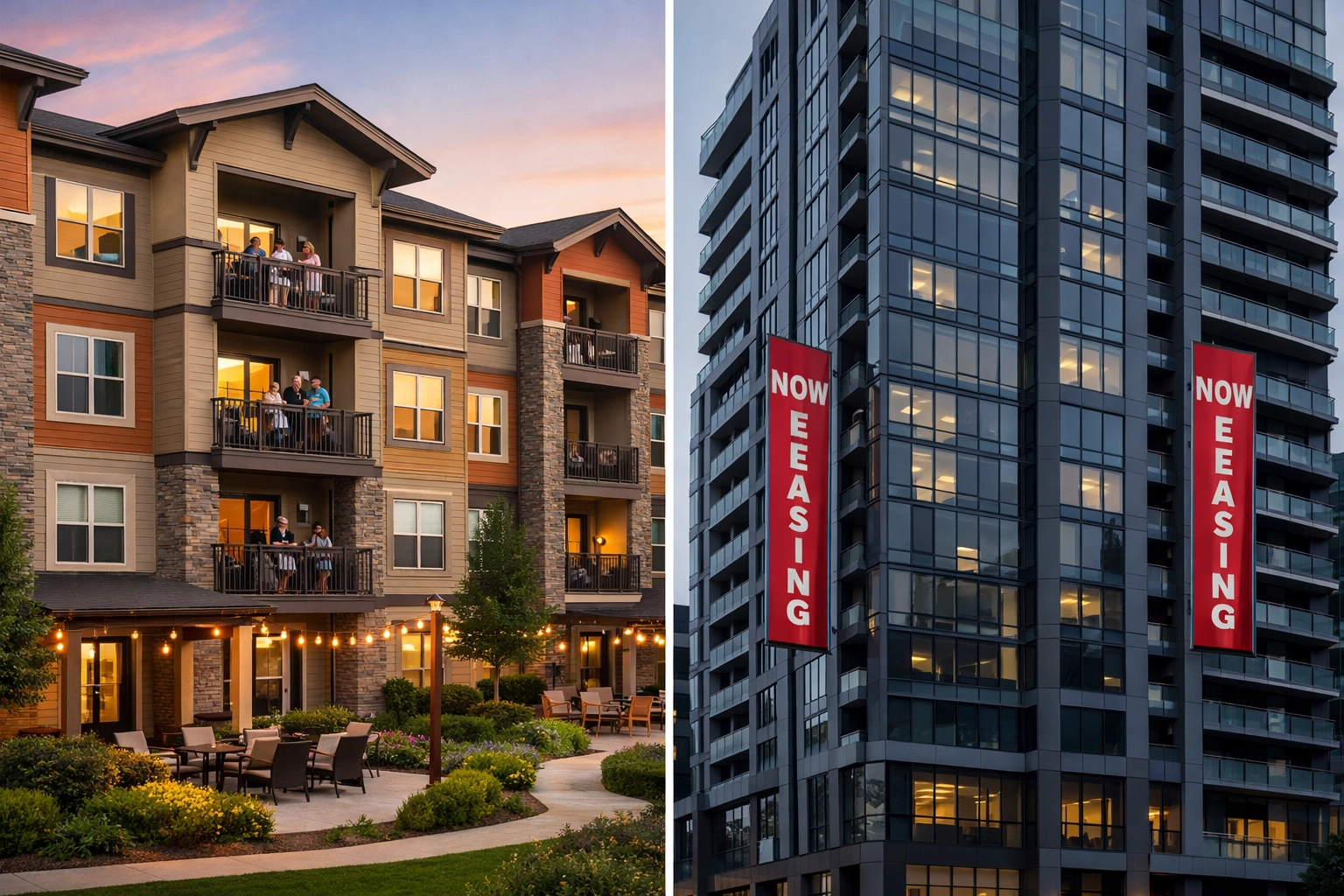
National vacancy is elevated but not crisis-level. Regional divergence is the entire story.
Sun Belt markets record flat or negative effective rent growth as new supply overwhelms demand. Midwest and Northeast metros post steady rent gains, benefiting from limited construction pipelines and stable job growth.
The construction slowdown provides critical relief.
Multifamily starts declined approximately 40% between 2023 and 2025. Financing constraints, elevated construction costs, and muted rent growth expectations curtailed new projects. Construction activity is expected to slow considerably through 2026.
This moderating pipeline allows absorption to gradually catch up with supply. Markets that avoid additional oversupply will stabilize first.
Lender underwriting has tightened materially for multifamily deals.
Gone are the days of 80% loan-to-cost construction financing and 75% stabilized loan-to-value refinancing. Current multifamily lending parameters include:
- Loan-to-value ratios capped at 65-70% for acquisitions
- Debt service coverage minimums of 1.30x-1.35x
- Increased scrutiny on market-level supply pipelines
- Preference for suburban over urban core locations
- Enhanced focus on workforce housing versus luxury product
Class B properties in suburban and secondary urban markets now outcompete downtown Class A properties in lender preference rankings. Remote work permanence reduced commute frequency, shifting tenant location priorities.
Capital remains available. Structure matters more than ever.
The cleanest execution for stabilized multifamily is still multifamily agency debt.
That means:
- Fannie Mae multifamily loan executions for qualifying assets
- Freddie Mac multifamily loan executions where the box is a fit
- Stronger outcomes when the story is workforce demand, stable collections, and defensible submarket positioning
For borrowers hitting coverage, DSCR multifamily refinance is still viable in many cases, but pricing and leverage are unforgiving when concessions compress NOI.
When the deal is transitional or the maturity clock is tight, a multifamily bridge loan can solve timing and stabilize before an agency takeout.
The challenge in 2026: lender selectivity. The underwriting file must prove competitive advantage at the property and submarket level.
Commercial Real Estate Lending Trends: Where Capital Is Flowing in 2026
Lender allocations in early 2026 are blunt.
Capital goes where cash flow is durable and the exit is obvious.
That is the core of commercial real estate lending trends this year.
Top-tier lending targets:
- Data centers with investment-grade tenants on long-term leases
- Modern industrial facilities under 5 years old in primary logistics markets
- Life science properties with credit tenants
- Self-storage in supply-constrained locations
- Manufactured housing communities
Moderate lending appetite:
- Multifamily in Midwest and Northeast metros with limited supply pipelines
- Grocery-anchored retail with strong co-tenancy
- Medical office buildings on hospital campuses
- Class A industrial built 2015-2020 with functional layouts
Restricted lending categories:
- Multifamily in oversupplied Sun Belt markets
- Office properties outside trophy-class gateway assets
- Older industrial requiring significant capital expenditures
- Retail without grocery or necessity-based anchors

The divergence between industrial and multifamily stems from fundamental supply-demand dynamics.
Industrial benefits from supply-constrained specificity. Prime logistics real estate has limited functional alternatives. Occupiers cannot easily substitute inferior buildings for modern facilities in strategic locations.
Multifamily faces generalized oversupply. Many markets have excessive apartment inventory regardless of asset quality. Tenant mobility between similar products intensifies competition.
Marcus & Millichap research continues to frame 2026 as a “selective momentum” year across property types, with capital leaning toward durable fundamentals. Reference (video research page):
https://www.marcusmillichap.com/research/videos/retail-real-estate-sustaining-momentum-in-2026
Translation for borrowers: industrial refis are getting done faster; multifamily refis are getting done only when the DSCR and submarket story are tight.
Loan Maturity Playbooks (Industrial vs. Multifamily)
Refinance strategy in 2026 is a maturity strategy.
Industrial loan maturity: win with speed and simplicity
For sponsors staring at an industrial loan maturity, the best outcomes usually come from controlling the timeline and running a two-track process:
- Industrial loan refinance (bank/life company/debt fund) for stabilized, functional assets
- Industrial bridge loan when occupancy, rollover, or CapEx is the gating issue
Execution improves when the package is tight:
- Current rent roll + lease abstracts
- Trailing 12 and trailing 3 financials
- CapEx plan with bids and timing
- Clean sources/uses and a realistic exit
Multifamily loan maturity: agencies first, then bridge, then everything else
For multifamily loan maturity events, the capital stack is more opinionated.
Best-to-worst in many cases:
- Multifamily agency debt when the asset qualifies (often the best pricing/terms)
- DSCR multifamily refinance when cash flow supports it and NOI is not concession-driven
- Multifamily bridge loan when the business plan is real and the timeline is tight
Florida note: refinances are getting hyper-local
Florida execution is not one market. It is multiple markets with different rent and supply dynamics.
For sponsors targeting multifamily refinance Florida, underwriting must address concessions, renewal trends, insurance, and taxes at the property level.
This is where working with a commercial loan broker Florida matters: broader lender coverage, faster pivots, and better structuring when a lender retrades.
The Bottom Line (February 2026)
Industrial is a refinance-friendly story in 2026.
Multifamily is a maturity-and-DSCR story in 2026.
If you have an upcoming industrial loan maturity or multifamily loan maturity, the winners are not the borrowers who “shop rates.” They are the borrowers who structure the right execution:
- industrial loan refinance / warehouse refinance when the asset is stabilized
- industrial bridge loan when timing or tenancy is the issue
- multifamily agency debt (including a Fannie Mae multifamily loan or Freddie Mac multifamily loan) when the deal qualifies
- DSCR multifamily refinance when coverage is real, not concession-supported
- multifamily bridge loan when the business plan needs time
Triton Equity Group, LLC runs these executions daily across a platform with thousands of loan products and hundreds of lenders. Technology plus concierge service. Borrowers stay in the driver’s seat.
For Florida sponsors needing multifamily refinance Florida guidance or a reliable commercial loan broker Florida for industrial and multifamily, connect here:
https://michaelvaldes.commloan.com




Continue Reading



Have a Deal in Progress?
Let’s structure the right capital solution.
