
Industrial's New Chapter: Reshoring and the 2026 Manufacturing Boom

Manufacturing is coming home.
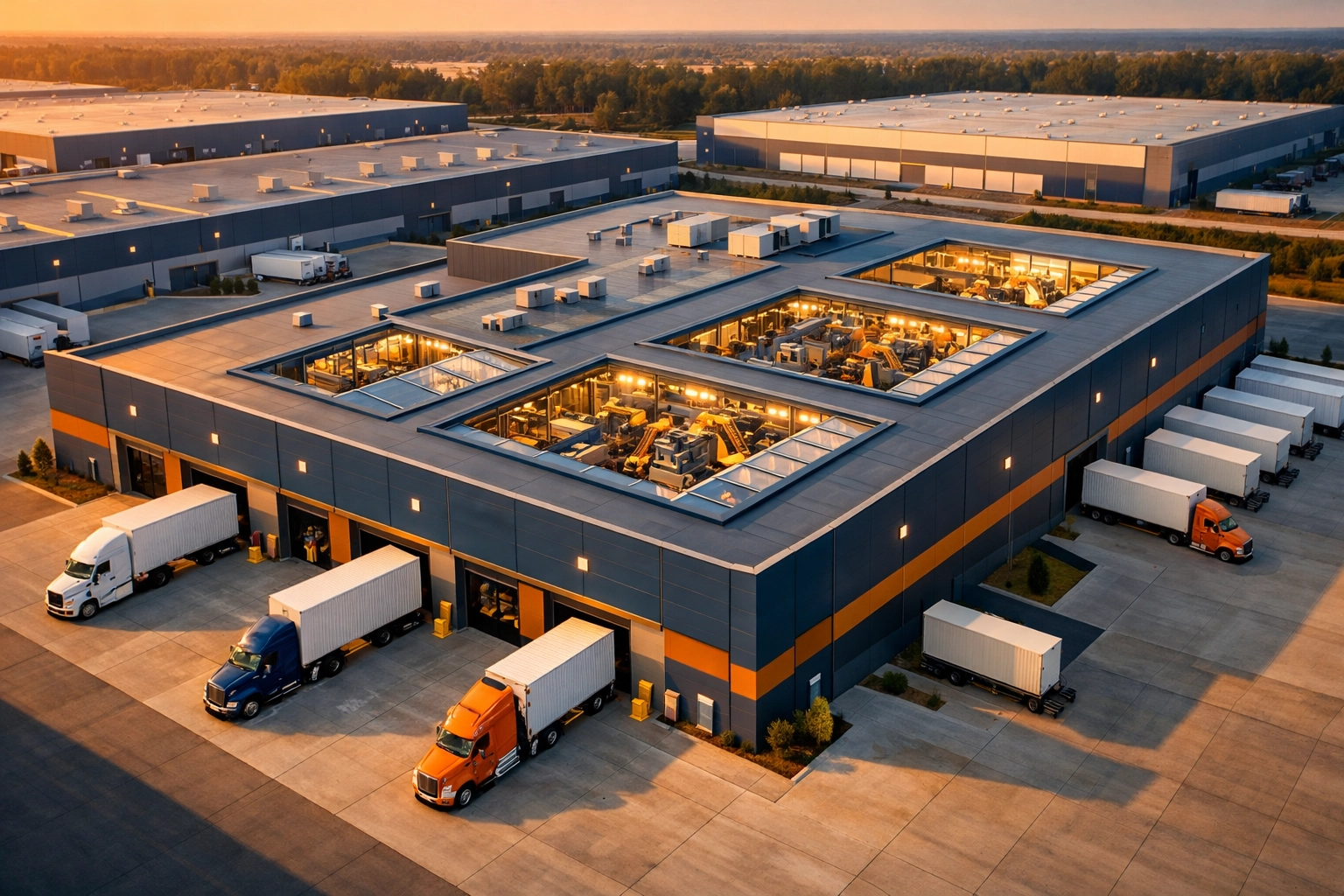
After decades of offshoring, U.S. companies are relocating production back to domestic soil at a pace not seen since the 1980s. The result? A full-scale industrial real estate boom that's rewriting leasing demand, construction pipelines, and regional market hierarchies.
JLL's Q4 2025 Industrial Market Dynamics report logged 533 million square feet of leasing volume in 2025, a clear signal that manufacturers aren't just talking about reshoring. They're signing long-term leases and building custom facilities to make it happen.
Here's what the data tells us about where industrial CRE is heading in 2026.
Manufacturing Comes Home: The Reshoring Wave
The reshoring movement isn't new, but the scale is.
Since 2010, nearly two million jobs have returned to U.S. soil, recovering roughly 40% of the positions lost to offshoring over the prior three decades. In 2023 alone, manufacturers announced 287,000 reshoring and foreign direct investment jobs, the second-highest year on record.
Why the surge?
Trade policy uncertainty tops the list. Tariff volatility and geopolitical friction are forcing companies to reduce exposure to overseas suppliers. According to the Reshoring Initiative's 2024 Data Report, 69% of U.S. manufacturers have begun reshoring supply chains, and 94% report it's working.
The practical drivers:
- 45% want production closer to engineering and R&D capabilities.
- 45% aim to cut freight and duty costs.
- 38% are actively mitigating geopolitical risk.
Semiconductors lead the charge. Companies have committed more than $500 billion in private sector investments to rebuild domestic chipmaking capacity. By 2032, the U.S. is expected to triple semiconductor production and support over 500,000 jobs, according to the U.S. Department of Commerce CHIPS Program.
Other sectors following suit: industrial equipment, medical devices, automotive, and aerospace, particularly in the South and Midwest, where supplier networks are localizing around anchor manufacturers.
The Build-to-Suit Explosion: 117% Increase
Generic warehouses aren't cutting it anymore.
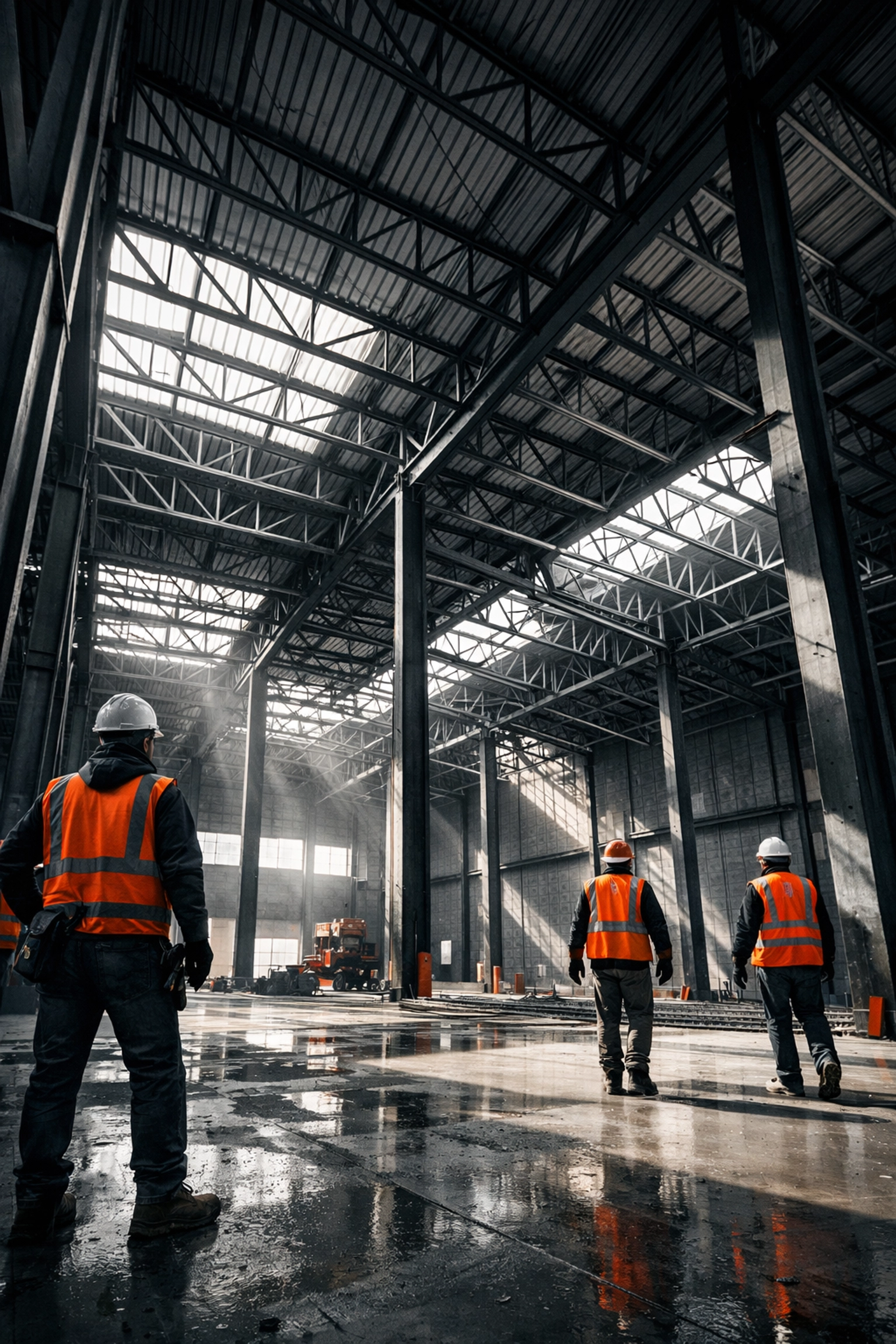
Manufacturers need specialized facilities, high ceilings, reinforced floors, heavy power loads, and direct rail or port access. That's fueling a massive surge in build-to-suit leasing.
According to JLL's Industrial Tenant Demand Study, build-to-suit inquiries jumped 117% year-over-year in 2025. Companies aren't waiting for speculative construction. They're hiring developers to design and deliver facilities tailored to their production lines.
The reasons:
- Automation and robotics require custom layouts.
- Semiconductor and battery manufacturing demand cleanroom-grade environments.
- Automotive and aerospace suppliers need proximity to assembly hubs with little room for error.
Build-to-suit deals also offer financing advantages. Developers often front the capital, then lease back to the tenant under long-term agreements (10–20 years). For manufacturers navigating the 2026 maturity wall, this structure preserves liquidity while locking in occupancy.
The catch? Lead times are stretching. Permitting, utility upgrades, and skilled labor shortages mean projects can take 18–24 months from site acquisition to certificate of occupancy. Early movers are winning the best sites; late arrivals are facing delays or settling for less-optimal locations.
Small-Bay vs. Big-Box: Where the Vacancy Lies
Not all industrial space is created equal.
The national vacancy rate sits at 8.6% as of Q1 2026, per Marcus & Millichap's January 2026 Equity Capital Outlook, but that figure masks significant divergence by property type.
Big-box facilities (500,000+ SF) are 98% occupied in major logistics markets. E-commerce fulfillment, third-party logistics (3PL), and cold storage tenants are absorbing every available square foot.
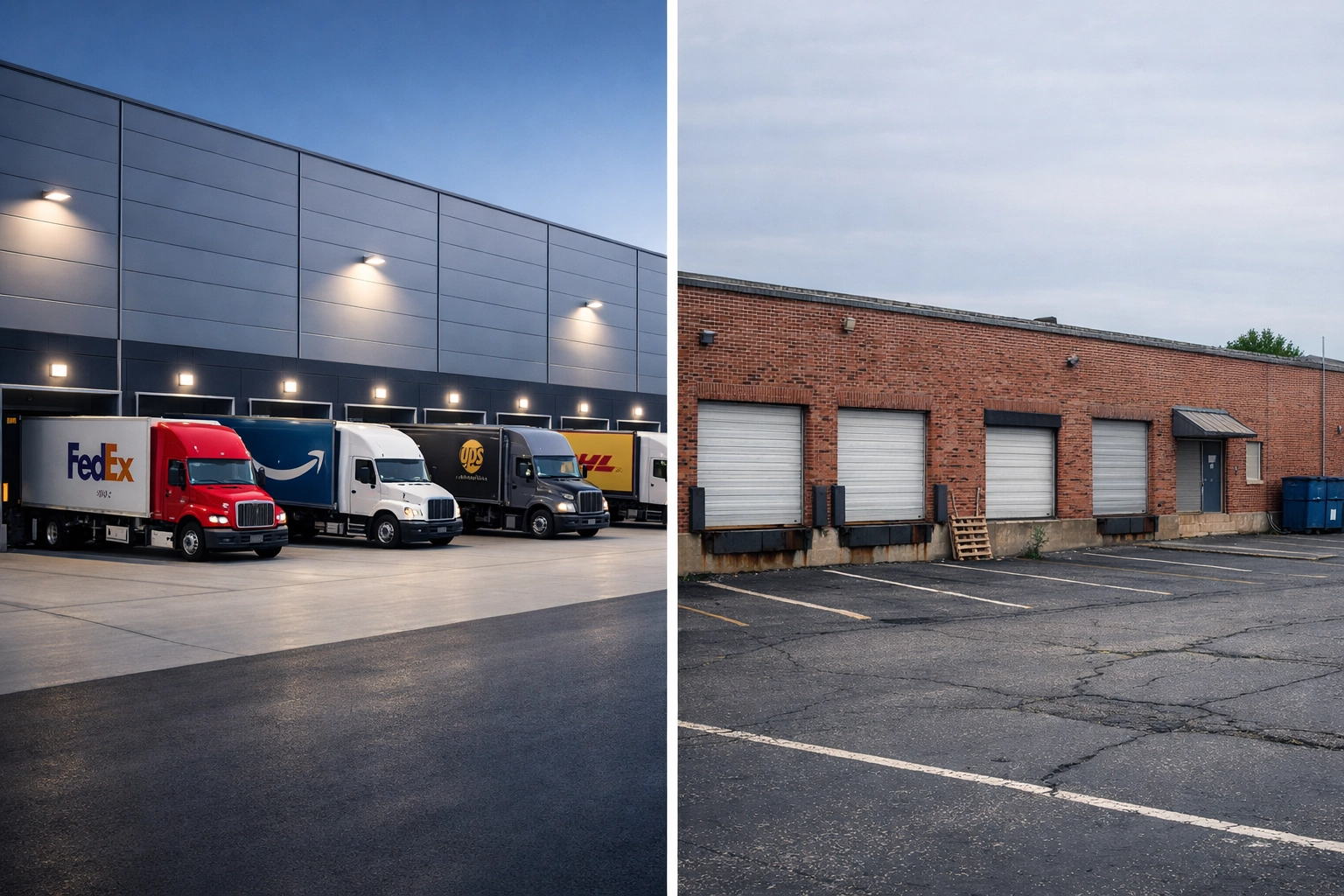
Small-bay industrial (under 50,000 SF) tells a different story. Vacancy in this segment has climbed to 12.4% nationally, driven by:
- Older buildings lacking modern dock configurations.
- Insufficient ceiling heights for racking systems.
- Poor last-mile access in congested urban cores.
The takeaway: owners of legacy small-bay assets face a decision. Retrofit and modernize, or accept declining rents as tenants migrate to newer stock.
Lenders are pricing this reality into underwriting. Bridge financing for value-add industrial conversions is seeing renewed interest, particularly in tertiary markets where land costs remain low but demand for manufacturing space is rising.
Southeast Dominance: The Savannah and Atlanta Hubs
Geography matters.
The Southeast is capturing a disproportionate share of reshoring investment, with Savannah and Atlanta emerging as the industrial winners of 2026.
Savannah benefits from:
- The deepest container port on the East Coast (post-expansion).
- Direct rail connections to the Midwest manufacturing corridor.
- Lower land costs than competing coastal markets.
JLL's Southeast Industrial Report notes that Savannah's industrial absorption outpaced new deliveries by 3.2 million SF in 2025. Vacancy dropped to 4.1%, and asking rents climbed 9.7% year-over-year.
Atlanta offers different advantages:
- Central U.S. location for same-day or next-day distribution.
- Established labor force with manufacturing experience.
- Pro-business tax climate and streamlined permitting.
Together, these two metros accounted for 18% of all build-to-suit industrial starts in 2025, second only to the Inland Empire.
The implication for borrowers: industrial assets in these markets are commanding lower cap rates and higher loan-to-value ratios than national averages. Lenders view the Southeast as a low-risk, high-growth play, particularly for owner-occupiers seeking long-term debt.
Other metros gaining traction: Phoenix (semiconductor clusters), Columbus, Ohio (automotive suppliers), and Raleigh-Durham (life sciences manufacturing).
What This Means for Industrial Financing in 2026
Reshoring isn't a headline, it's a capital deployment cycle.
Industrial properties with long-term, credit-rated tenants are securing some of the most aggressive financing terms in commercial real estate. CMBS lenders are quoting 5.75–6.25% on 10-year fixed-rate deals for stabilized industrial assets, while agency programs (Fannie Mae, Freddie Mac) are active on mixed-use industrial projects with multifamily or flex components.
For owners facing loan maturities in 2026, the industrial sector offers a refinancing advantage. Unlike office or retail, industrial fundamentals remain strong. Vacancy is low, rent growth is positive, and tenant retention is high. That translates to smoother underwriting and faster closings.
Bridge lenders are also stepping in for value-add plays: repositioning obsolete small-bay warehouses, funding tenant improvements for build-to-suit deals, and financing land acquisition for ground-up construction.
The sector's momentum is creating opportunity, but it's concentrated. Secondary and tertiary markets with proximity to ports, interstates, and skilled labor are winning. Legacy industrial in urban cores without modernization plans is losing.
FAQ
Q: What is driving the reshoring boom in U.S. manufacturing?
Trade policy uncertainty, supply chain resilience, and geopolitical risk are the primary drivers. Companies want production closer to engineering teams and domestic customers, with lower exposure to tariff volatility.
Q: How much industrial space was leased in 2025?
JLL's Q4 2025 report logged 533 million square feet of leasing volume, driven largely by manufacturing tenants and 3PL operators.
Q: What is a build-to-suit lease, and why is it surging?
A build-to-suit is a custom-designed facility built specifically for one tenant's operational needs. Demand jumped 117% in 2025 due to automation, specialized manufacturing, and tenant preference for long-term, tailored space.
Q: Where are the best industrial markets in 2026?
Savannah and Atlanta lead the Southeast. Phoenix, Columbus, and Raleigh-Durham are also strong, driven by semiconductor, automotive, and life sciences manufacturing.
Q: Is industrial real estate still a good investment?
Yes; especially in high-growth logistics corridors and manufacturing hubs. Vacancy is low, rent growth is positive, and financing terms remain competitive compared to other CRE sectors.
Sources




Continue Reading



Have a Deal in Progress?
Let’s structure the right capital solution.
