
The Green Premium: Why Sustainable Finance and C-PACE are Dominating 2026 Deals

The Green Premium: Why Sustainable Finance is No Longer Optional
Sustainable finance is no longer a "nice to have" line item in CRE deal structures.
It's mission-critical capital allocation.
Property owners who ignore decarbonization targets are facing material disadvantages in the capital stack: higher borrowing costs, limited exit options, and declining asset valuations. The market is pricing sustainability, or the lack of it, into every transaction.
The data is unambiguous. Properties with green certifications command rent premiums of 5-8% compared to conventional assets. Energy-efficient buildings reduce operating expenses by an average of 18-22%, directly improving NOI and cap rate compression.
Banks and institutional lenders are embedding ESG metrics into underwriting criteria.
Non-compliant assets face higher debt service coverage ratio requirements and reduced loan-to-value thresholds. This isn't activism. It's risk management.
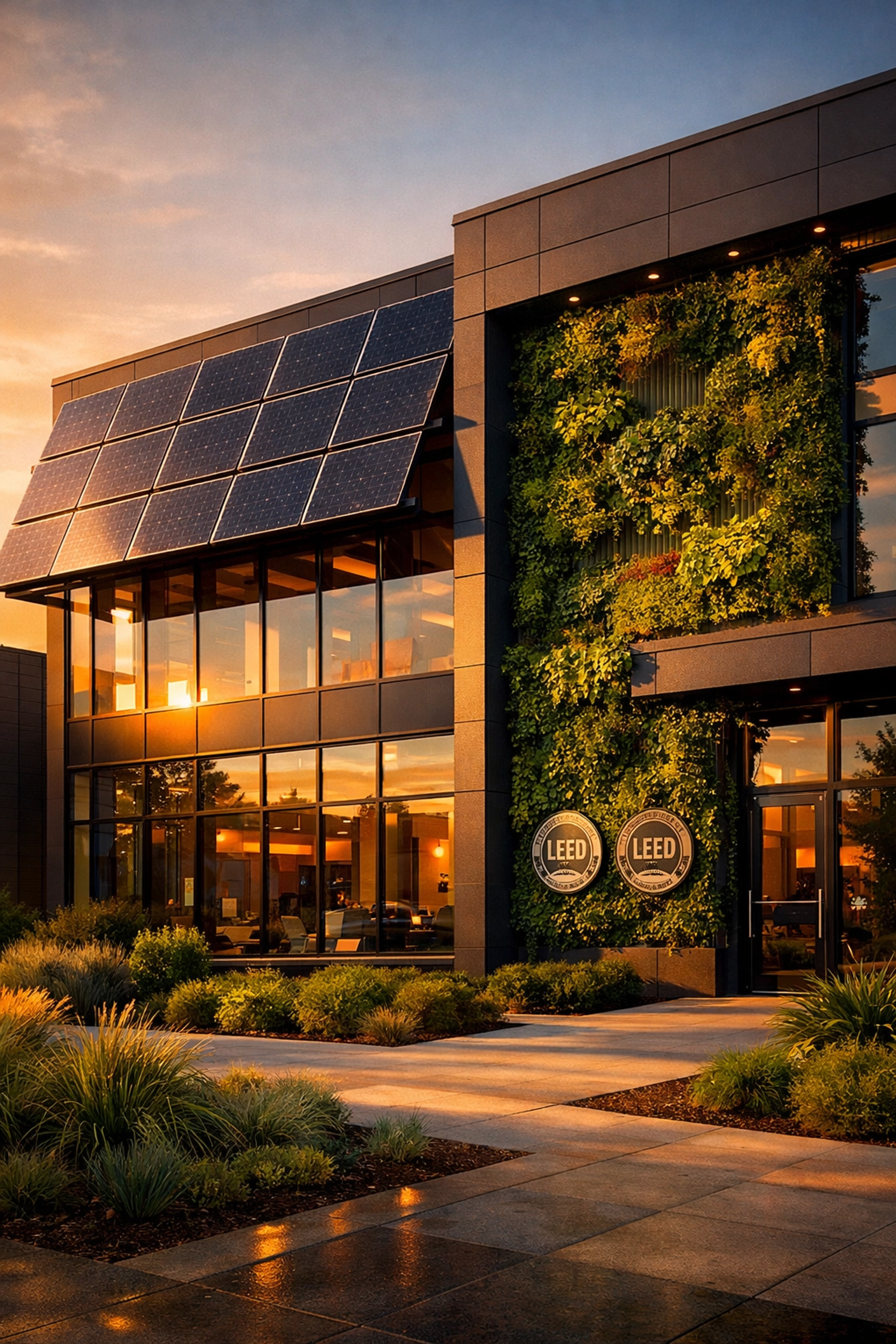
Corporate tenants are mandating sustainability clauses in lease agreements. JLL's global CRE trends coverage highlights that energy management and utility cost savings are now top-three priorities for Fortune 500 occupiers evaluating space. Source: https://www.jll.com/en-us/insights/market-outlook/top-global-cre-trends
Translation: landlords without energy-efficient infrastructure are losing lease renewals.
The financial incentive structure has fundamentally shifted. Sustainability-linked loans and C-PACE financing are rewriting the playbook for both acquisition and value-add strategies.
C-PACE Evolution: From Recapitalizations to New Developments
Commercial Property Assessed Clean Energy (C-PACE) financing has matured beyond its original use case.
Early adoption focused on recapitalization deals, existing properties refinancing traditional debt with long-term, non-recourse C-PACE loans to fund energy retrofits.
That model still works. But the real evolution is happening upstream.
PACE Equity's 2026 Outlook identifies a decisive shift toward new construction and adaptive reuse projects using C-PACE as a primary financing tool. Source: https://www.pace-equity.com/2026-outlook/ The mechanism allows developers to roll energy-efficient systems, renewable installations, and HVAC modernizations into the property tax assessment, no balloon payments, no personal guarantees.
The capital stack advantages are significant:
- Non-recourse financing that doesn't impact traditional debt capacity
- 25-30 year amortization matching the useful life of energy assets
- No prepayment penalties in most jurisdictions
- Transferable to future buyers with the property
Ground-up multifamily and mixed-use developments are increasingly structured with C-PACE as subordinate debt, reducing the equity requirement by 10-15% compared to conventional financing.
Adaptive reuse projects, converting obsolete office or retail into residential or life science space, are natural candidates. The energy efficiency mandates required for modern code compliance align perfectly with C-PACE eligibility requirements.
Florida, Texas, and Ohio have emerged as the highest-volume C-PACE markets. Florida alone processed $780 million in C-PACE financing in 2025, driven by multifamily development in Tampa, Orlando, and Miami submarkets.
The shift from recapitalization to new development signals market maturity. C-PACE is no longer a niche product for sustainability-focused sponsors. It's a standardized tool in the capital stack.
Retrofitting the Middle Market: Unlocking Hidden Value
The middle market represents the largest untapped opportunity in green finance.
Properties valued between $5 million and $50 million account for approximately 70% of the U.S. commercial real estate inventory. Most are under-capitalized on energy efficiency improvements.
CBRE's Decarbonizing Commercial Real Estate report identifies a critical financing gap: middle-market owners lack access to the sustainability-linked loan products typically reserved for institutional portfolios.
The problem is structural.
Traditional construction loans for retrofits require significant equity injections, short repayment terms, and personal recourse, barriers that prevent most small-to-midsize operators from executing energy upgrades.
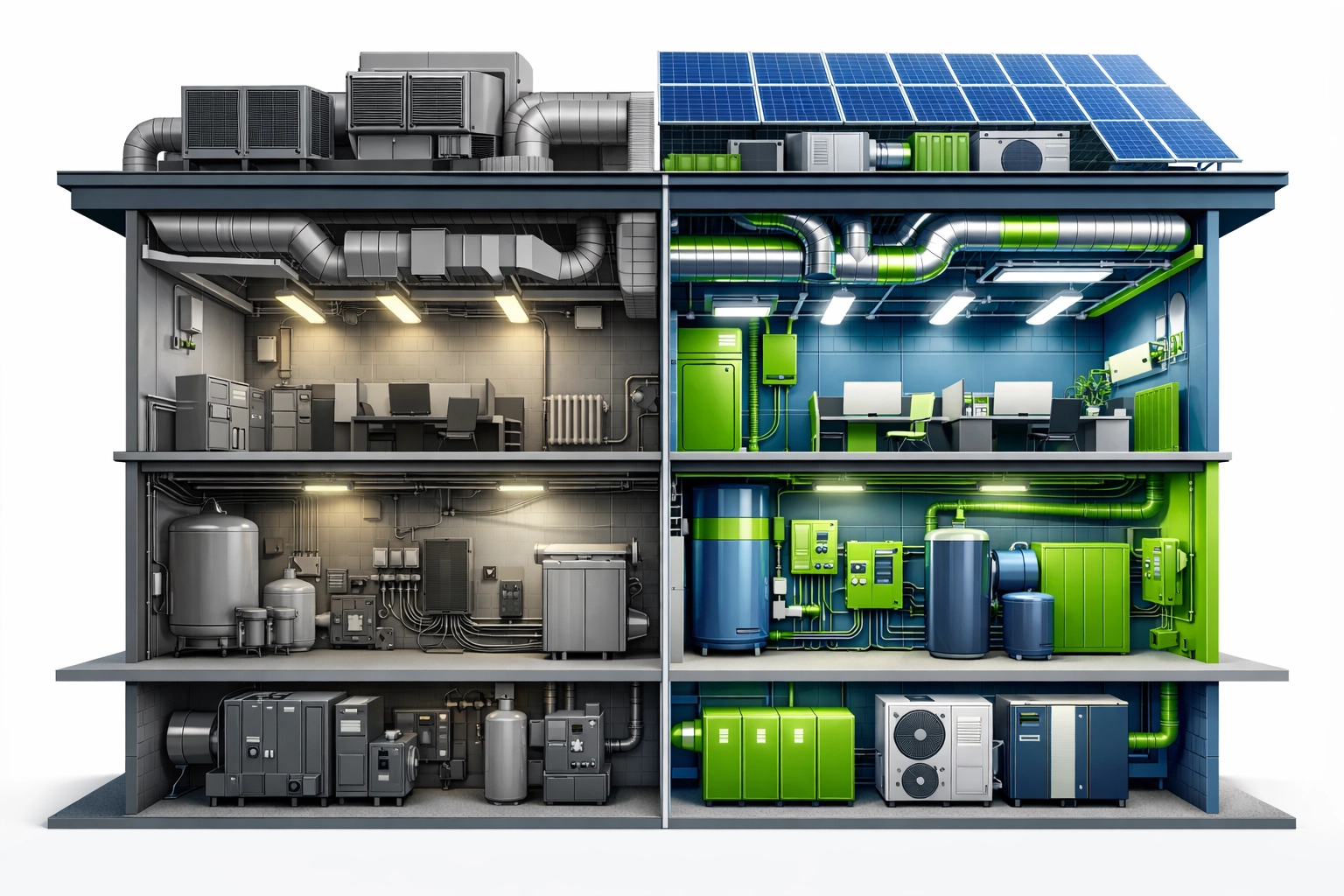
The solution: retrofit loan models specifically designed for middle-market assets.
These products combine C-PACE financing with mezzanine debt and utility rebate programs to reduce upfront capital requirements. Repayment is structured around projected utility savings, creating immediate positive cash flow.
Real-world execution looks like this:
- A 120-unit multifamily property in Jacksonville finances a $1.2 million HVAC and solar retrofit using C-PACE and utility incentives
- The energy savings generate $14,000 per month in reduced operating expenses
- C-PACE debt service is $9,500 per month, creating a net cash flow gain of $4,500 monthly
The NOI lift improves valuation by $540,000 at a 6% cap rate.
Middle-market owners who execute these retrofits are gaining competitive advantages in lease-up velocity, tenant retention, and exit multiples. Properties with documented energy performance metrics are attracting higher offers from institutional buyers underwriting long-term ESG compliance.
The value creation isn't theoretical. It's showing up in transaction comps.
The $1.6 Trillion Opportunity: Sustainable Debt Trends in 2026
Global sustainable debt issuance is projected to reach $1.6 trillion in 2026, according to ING's Sustainable Debt Outlook. Source: https://think.ing.com/articles/sustainable-debt-outlook-2026-higher-issuance-with-changing-compositions/
The composition of that capital tells the story:
- $530 billion in green bonds
- $190 billion in sustainability bonds
- $115 billion in social bonds
- $40 billion in transition bonds
Green bonds dominate because they offer the most transparent use-of-proceeds structure. Capital is earmarked exclusively for energy efficiency, renewable installations, and decarbonization projects.
Sustainability-linked loans (SLLs) are the fastest-growing segment.
Unlike green bonds, SLLs don't restrict capital to specific projects. Instead, borrowers commit to enterprise-wide ESG targets, carbon reduction benchmarks, energy consumption thresholds, or renewable energy adoption percentages.
If the borrower hits the targets, the interest rate steps down. Miss the targets, the rate adjusts upward.
This creates direct financial alignment between sustainability performance and borrowing costs.
U.S. commercial real estate borrowers are increasingly structuring agency debt, life company loans, and CMBS with sustainability-linked pricing. Fannie Mae and Freddie Mac have expanded their green financing programs, offering 10-25 basis point rate reductions for properties meeting energy performance standards.
The incentive structure is accelerating adoption.
Transition finance is the wildcard for 2026. Transition bonds and loans are designed for high-emission properties, office towers, industrial facilities, legacy retail, that require phased decarbonization strategies.
The market historically avoided these assets. Now, capital is flowing specifically to finance their transformation.
Asia led early adoption. North America and Europe are scaling rapidly as regulatory frameworks clarify eligibility standards.
For CRE owners managing aging portfolios, transition finance offers a path to refinance at competitive rates while funding multi-year energy retrofits.
The alternative, waiting for traditional lenders to extend bridge loans or hoping for market-rate refinancing, is increasingly cost-prohibitive.
FAQ & Sources
What is C-PACE financing?
Commercial Property Assessed Clean Energy (C-PACE) is a long-term, non-recourse financing mechanism that allows property owners to fund energy efficiency, renewable energy, and water conservation improvements. Repayment is structured as a property tax assessment over 20-30 years.
How do sustainability-linked loans differ from green bonds?
Green bonds restrict capital to specific sustainability projects. Sustainability-linked loans provide flexible capital but tie interest rates to borrower performance against ESG targets, hitting benchmarks reduces rates; missing them increases rates.
Which property types benefit most from green financing?
Multifamily, industrial, and medical office buildings see the highest return on energy retrofits due to longer tenant retention and operational cost savings. Office assets face the most aggressive ESG underwriting scrutiny from lenders.
Can middle-market owners access C-PACE and sustainability-linked loans?
Yes. C-PACE programs are available across 38 states with property value minimums as low as $1 million. Sustainability-linked loan products are expanding into the middle market through regional banks and specialty lenders.
Where can I find more information on CRE financing strategies?
For a market-wide baseline on 2026 CRE conditions, review Deloitte’s Commercial Real Estate Outlook: https://www.deloitte.com/us/en/insights/industry/financial-services/financial-services-industry-outlooks/commercial-real-estate-outlook.html
Sources:
- JLL, Top Global CRE Trends — https://www.jll.com/en-us/insights/market-outlook/top-global-cre-trends
- PACE Equity, 2026 Outlook — https://www.pace-equity.com/2026-outlook/
- ING, Sustainable debt outlook 2026: higher issuance with changing compositions — https://think.ing.com/articles/sustainable-debt-outlook-2026-higher-issuance-with-changing-compositions/
- Deloitte, Commercial Real Estate Outlook — https://www.deloitte.com/us/en/insights/industry/financial-services/financial-services-industry-outlooks/commercial-real-estate-outlook.html




Continue Reading



Have a Deal in Progress?
Let’s structure the right capital solution.
