
The Structural Squeeze: Why "Class A" Industrial Scarcity is Decoupling from Macro Trends in 2026
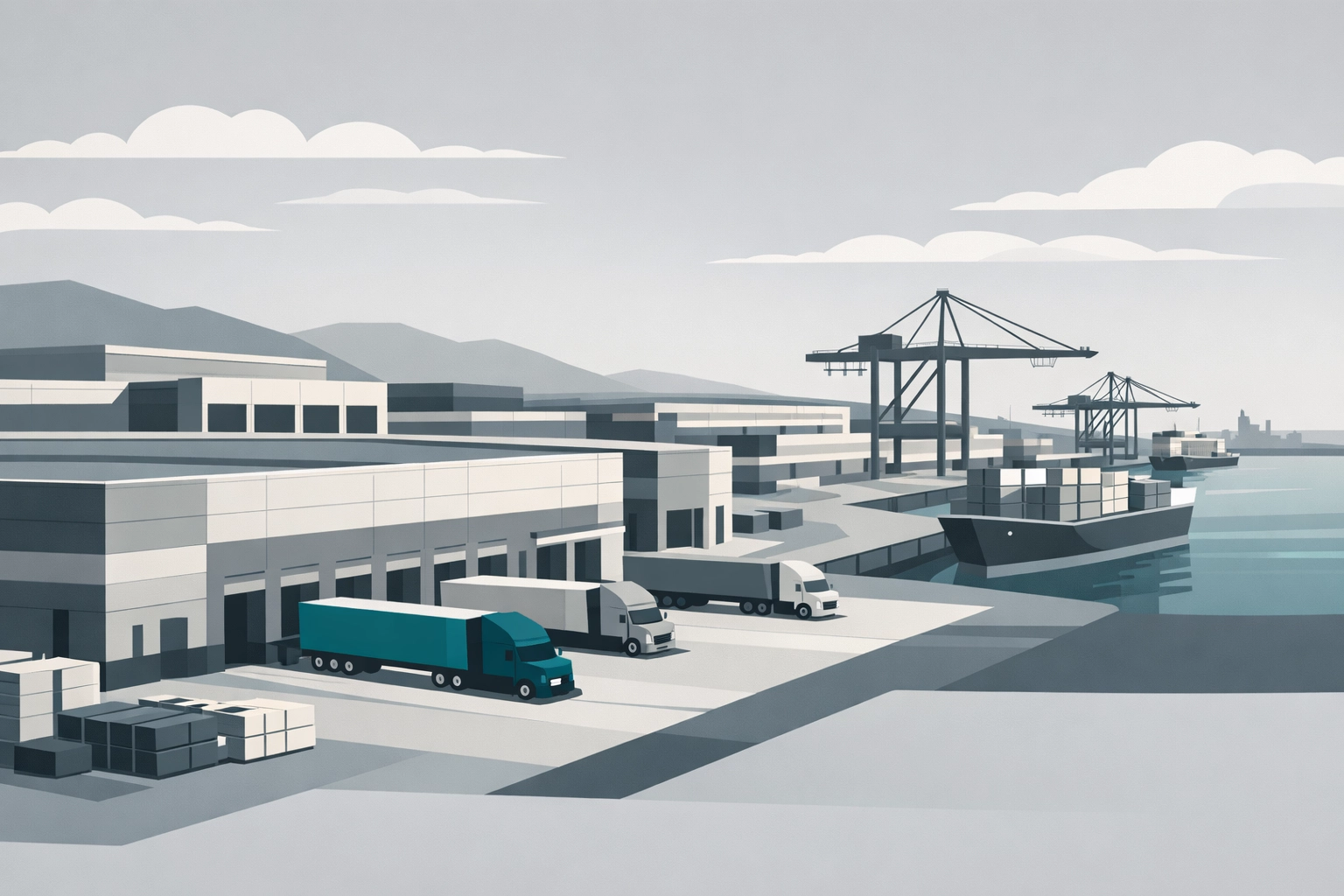
The 2026 industrial landscape is no longer a monolith. While macroeconomic headlines suggest a cooling period for the broader commercial real estate sector, the Class A industrial segment is operating under an entirely different set of physics. Data from Q1 2026 confirms a stark bifurcation: a structural scarcity of top-tier logistics space is driving rent growth and pricing power, even as broader absorption rates normalize.
For institutional investors and sophisticated owner-operators, the primary challenge is no longer "market timing." It is navigating a STRUCTURAL SQUEEZE.
The Great Construction Collapse
The most significant driver of the current supply-demand imbalance is the precipitous drop in new deliveries. Construction starts in 2025 were down 25% compared to the 2017–2019 average. As we enter the second quarter of 2026, total deliveries are projected to be more than 70% below the pandemic-era peak.
The capital markets environment over the last 24 months effectively halted the speculative development pipeline. Higher debt costs and stricter underwriting standards from regional banks led to a "wait-and-see" approach that has now manifested as a severe inventory shortage.
Key metrics for 2026:
- Construction Starts: 70% reduction in big-box (750k+ sq. ft.) facilities since 2023.
- Replacement Cost: Remains 20% above current Class A market rents in most tier-one hubs.
- Economics: New construction is functionally blocked in most markets unless rents achieve significant double-digit growth.
This supply vacuum is the primary reason commercial real estate trends 2026 are decoupling from general economic sentiment. You cannot lease what does not exist.
Institutional Insight: Colliers’ 2026 Commercial Real Estate Outlook
According to Colliers’ 2026 Commercial Real Estate Outlook (source: https://www.colliers.com/en/news/colliers-releases-report-on-2026-commercial-real-estate-outlook), the "Flight to Quality" has transitioned from a trend to a permanent market requirement. The report highlights that while national industrial vacancy hovers around 5.1%, vacancy for modern Class A inventory in premium logistics hubs remains sub-3%.
Colliers identifies three critical "Hardening Factors" for 2026:
- Specification Obsolescence: Buildings with clear heights below 32 feet are seeing rapid vacancy increases. Modern requirements (36–40 foot clear heights, ESFR sprinklers, 1:10,000 dock-to-square-foot ratios) have rendered 40% of the existing national inventory functionally obsolete for tier-one tenants.
- Geographic Bottlenecks: Land scarcity in the Inland Empire, Northern New Jersey, and Savannah has reached a terminal point. Build-to-suit projects now account for 20% of all new starts: a direct reflection of the lack of available, suitable standing inventory.
- The Absorption Multiplier: Every $1 billion in e-commerce sales continues to require approximately 1.25 million square feet of distribution space. Despite macro volatility, consumption patterns remain resilient, constantly eroding the remaining Class A buffer.
The Specification Gap: Why "Class B" Is Not a Substitute
In previous cycles, tenants would compromise on specifications to save on basis points. That strategy is dead. In 2026, the efficiency of a Class A facility: optimized for automation and high-velocity throughput: outweighs the rent savings of older Class B product.
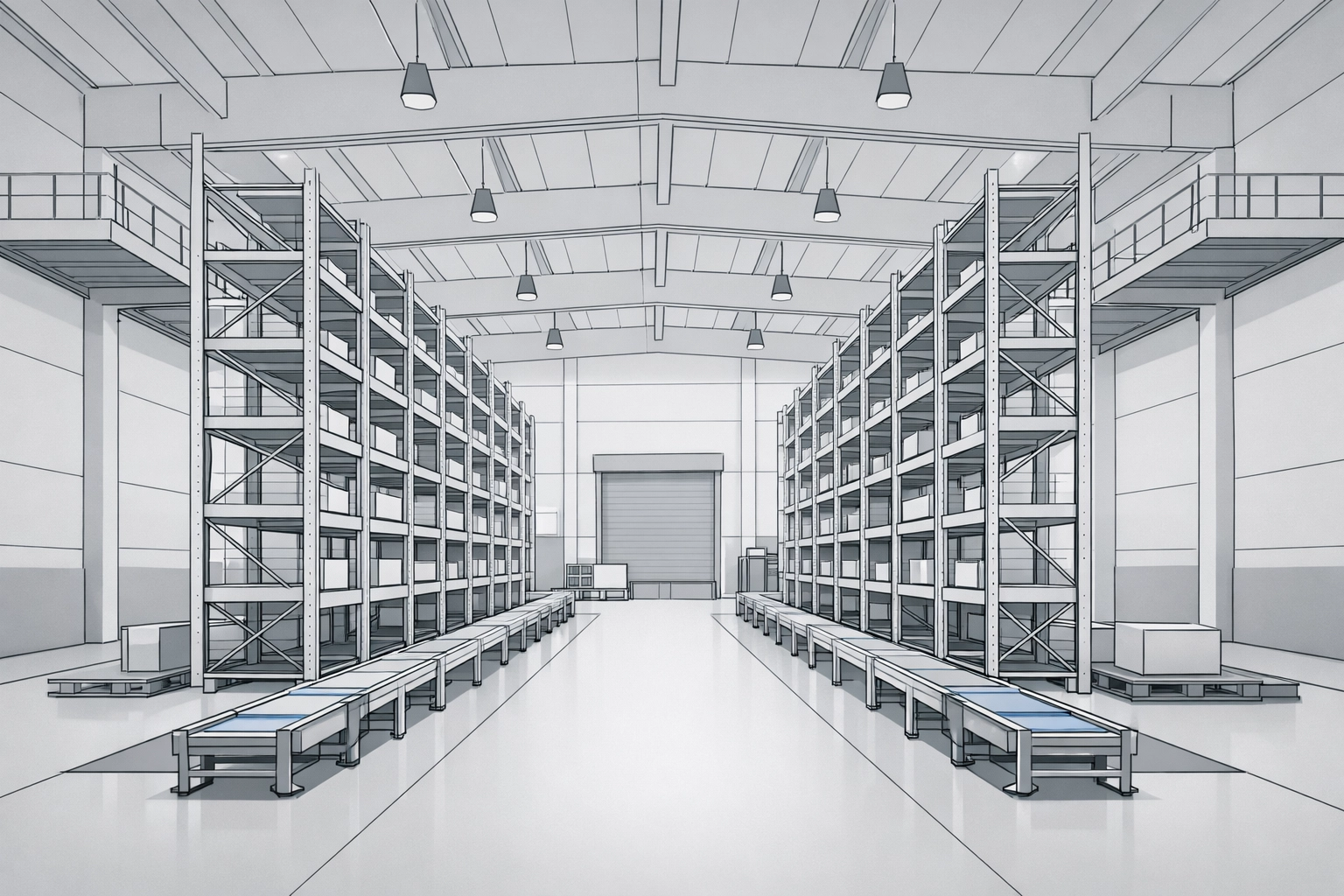
Automation is the catalyst. Modern robots and vertical picking systems require floor flatness (FF/FL) and clear heights that Class B assets simply cannot provide. This has created a "locked-in" demand for the top 10% of the market.
Capital Markets Interpretation: Strategic Analysis
From a commercial real estate capital markets perspective, the industrial sector is currently the "safest" bet for debt placement, provided the asset meets modern specifications. However, the lending environment is increasingly binary.
The Debt Divergence
Lenders are aggressively chasing Class A industrial assets, offering tighter spreads for stabilized properties in port-adjacent markets. Conversely, Class B assets in secondary markets are facing significant scrutiny. For owners of premium assets, this represents a unique window for an industrial loan refinance.
Refinancing strategies in 2026 focus on:
- Recapitalization: Pulling equity out of appreciated Class A assets to fund acquisitions of underperforming Class B assets for "Grade A" conversions.
- Bridge-to-Perm: Using short-term bridge debt to finalize tenant improvements and lease-up before locking in long-term institutional debt.
- DSCR Optimization: Leveraging 4–6% annual rent escalations (now the standard for new Class A leases) to improve Debt Service Coverage Ratios during the underwriting process.
At Triton Equity Group, LLC, we are seeing a surge in investment advisory requests focused on navigating this supply cliff. Investors are realizing that the "cooling" macro headlines are a smoke screen for the most aggressive landlord-market in a decade for top-tier space.

Supply Chain Hardening and Resilience
The decoupling is also driven by corporate strategy. "Just-in-Time" inventory models have been replaced by "Just-in-Case" resiliency. Major retailers and manufacturers are maintaining higher inventory levels on domestic soil to mitigate geopolitical risk and supply chain disruptions.
This "Supply Chain Hardening" requires more square footage per dollar of revenue than previous models. Even if consumer demand stays flat, the physical footprint required to support that demand is expanding. This structural shift provides a floor for industrial demand that did not exist in the 2008 or 2020 cycles.

High-Conviction Markets for 2026
The structural squeeze is most acute in specific geographic clusters. Investors focusing on these regions are seeing the highest "Alpha" in 2026:
- The Southeast Corridor: Savannah and Charleston continue to benefit from port expansion and the shift in global trade routes.
- The Southwest Border: Nearshoring in Mexico is driving unprecedented demand in El Paso and Laredo, where Class A space is virtually non-existent.
- Infill Last-Mile: Multi-story industrial in high-density urban centers (NYC, Chicago, LA) is commanding rent premiums of 25% or more over traditional suburban warehouses.
Owners in these markets should look toward asset management strategies that prioritize lease renewals over new acquisitions, given the near-zero probability of new competing supply entering the market before 2028.
The Path Forward: Execution in a Bifurcated Market
The window to secure favorable industrial loan refinance terms is open, but it requires a sophisticated narrative. Lenders need to see more than just a rent roll; they need to see the technical specifications that prove the asset's long-term viability against obsolescence.
Triton Equity Group, LLC specializes in positioning these complex industrial stories to the capital markets. Whether you are looking to sell smart or restructure existing debt, the data is clear: Class A industrial is no longer tethered to the macro-economic cycle. It is a utility, and the supply of that utility is running dry.
To discuss your industrial portfolio strategy and how to leverage the current supply-demand imbalance, contact our team today.
Triton Equity Group, LLC
Expertise. Strategy. Execution.
Learn More About Our Team




Continue Reading



Have a Deal in Progress?
Let’s structure the right capital solution.
